
13 March 2026
By Timothy Brazzel
The drone industry has consistently advanced in areas such as image quality, portability, and intelligent flight systems. However, every so often a product enters the market that does more than improve existing standards. It reshapes expectations.
The Antigravity A1 represents one of those rare shifts.
After extensive hands-on experience with the Infinity Bundle in both commercial and recreational environments, I can confidently say that this is not simply another aerial camera platform. It is a redefinition of how we capture perspective, movement, and space.
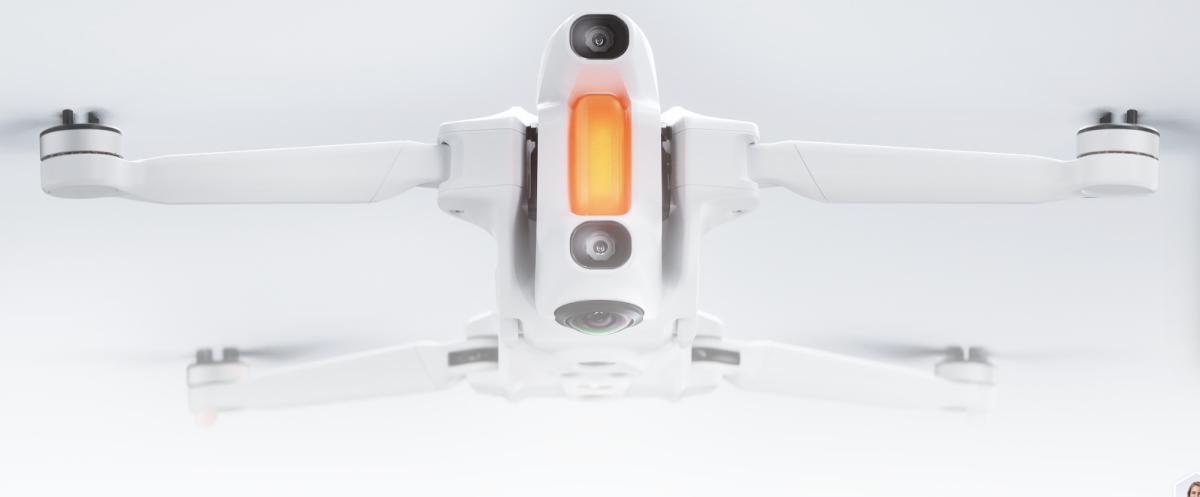
The Antigravity A1 is positioned as the world’s first consumer 8K 360-degree immersive drone. At its foundation, the aircraft captures everything around it simultaneously using dual sensors, allowing creators to reframe their footage after the flight is complete. The camera system records 8K 360 video at 30 frames per second, with additional recording options in 5.2K and 4K. It is capable of producing 55-megapixel 360-degree still images and utilizes advanced stitching technology to remove the drone from the final footage. The result is a floating, unobstructed viewpoint that places the viewer directly within the scene.
Beyond resolution, the Antigravity A1 offers meaningful flight performance metrics. With the high-capacity battery included in the Infinity Bundle, flight times approach approximately 39 minutes under optimal conditions. The aircraft remains under 250 grams when equipped with the standard battery, an important consideration for regulatory compliance in many regions. GPS stabilization, intelligent return-to-home functionality, and obstacle awareness systems contribute to a secure and accessible flying experience. Transmission range extends up to approximately 13 kilometers, supporting stable live viewing through the Vision Goggles. One thing to highlight is Remote ID. when using only the high-capacity battery will remote id activate automatically. However, when using the standard battery, remote id is no longer present. So it may serve well to know which batteries you're using at all times because it can very well determine if you're broadcasting Remote ID or not.
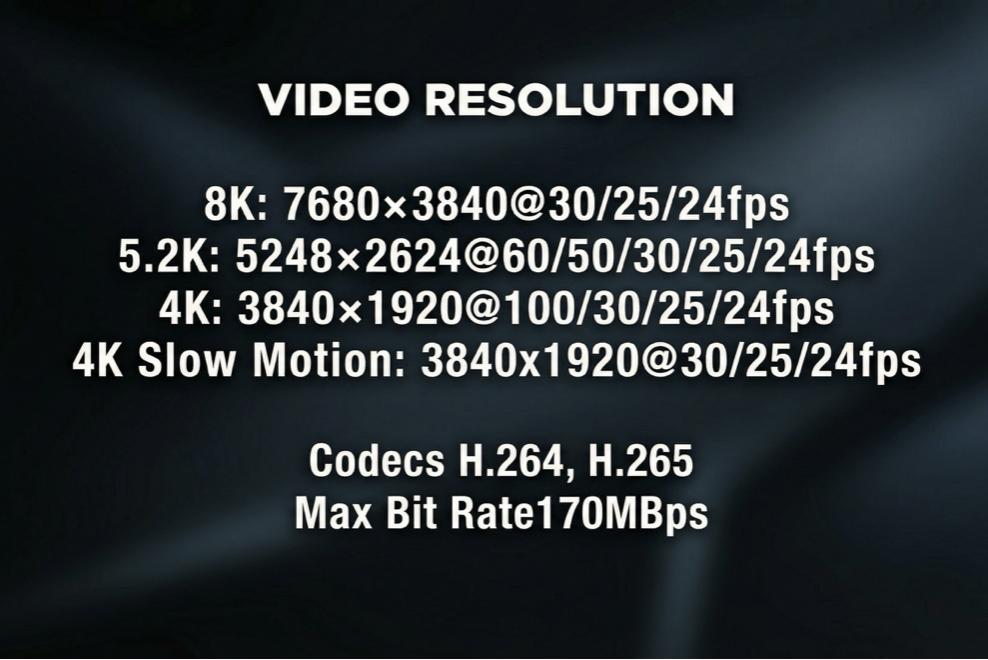
What separates the Antigravity A1 from traditional drones is not simply its camera specification, but the immersive flight philosophy built around it. Instead of framing shots in the air using yaw and gimbal adjustments, pilots capture an entire environment and determine the final composition later during post-production. This workflow significantly reduces the pressure to “get the shot” in real time. It encourages exploration rather than technical precision.
flight tests
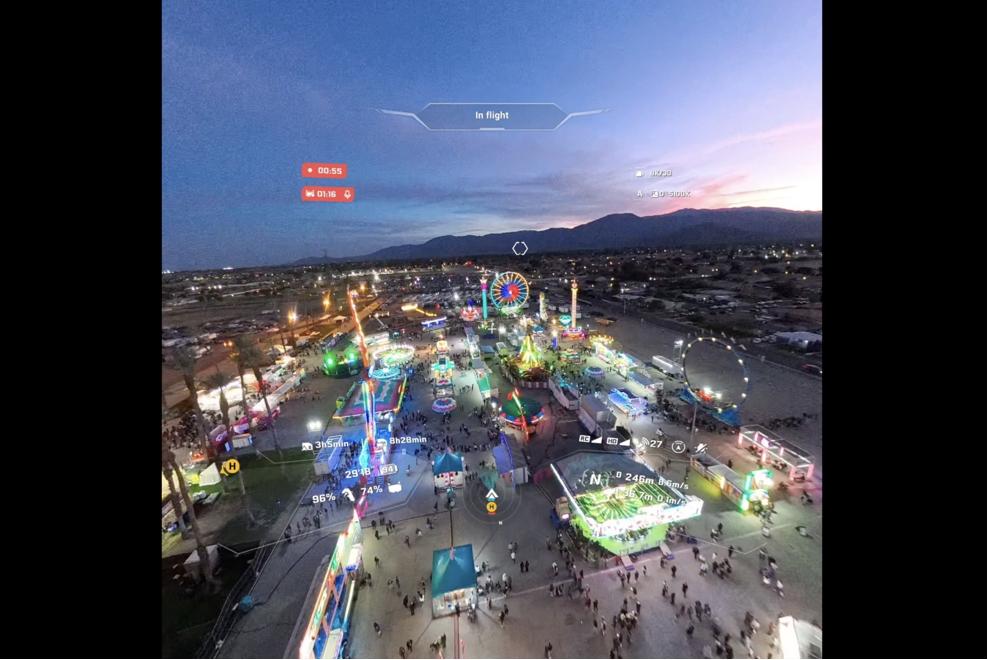
My first extended commercial use of the Antigravity A1 took place during coverage at a fair. Large public gatherings are often unpredictable, with dynamic crowd movement and constantly shifting compositions. Traditionally, operating in this environment requires intense focus on subject tracking, framing, and collision avoidance. With the A1, much of that mental load was reduced. I focused on flying clean paths and maintaining spatial awareness while trusting the 360 capture system to preserve every angle. During post-production, I was able to reframe crowd reactions, environmental establishing shots, and transitional fly-throughs from a single flight sequence. The efficiency gained through this workflow was immediately evident.

Recreational use provided an entirely different perspective. While visiting Atlanta, Georgia, I tested the A1 at sunset in temperatures near 25 degrees Fahrenheit. Even while wearing gloves, the cold made it difficult to feel the motion controller buttons, and at one point I laughed at how frozen my thumbs had become. What stood out most in that moment was not the discomfort, but how immersive the experience remained. Despite the temperature, I was focused on exploring the skyline, looking around the 3D space inside the goggles, and mentally envisioning the edits I would later create. That type of engagement is rare in conventional drone flying.
vision goggles
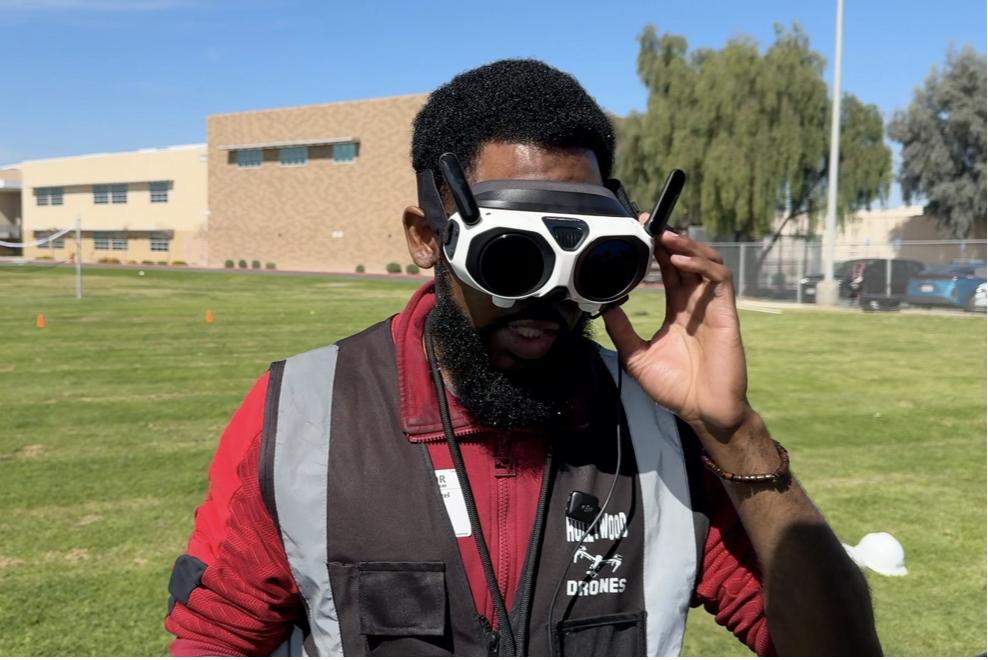
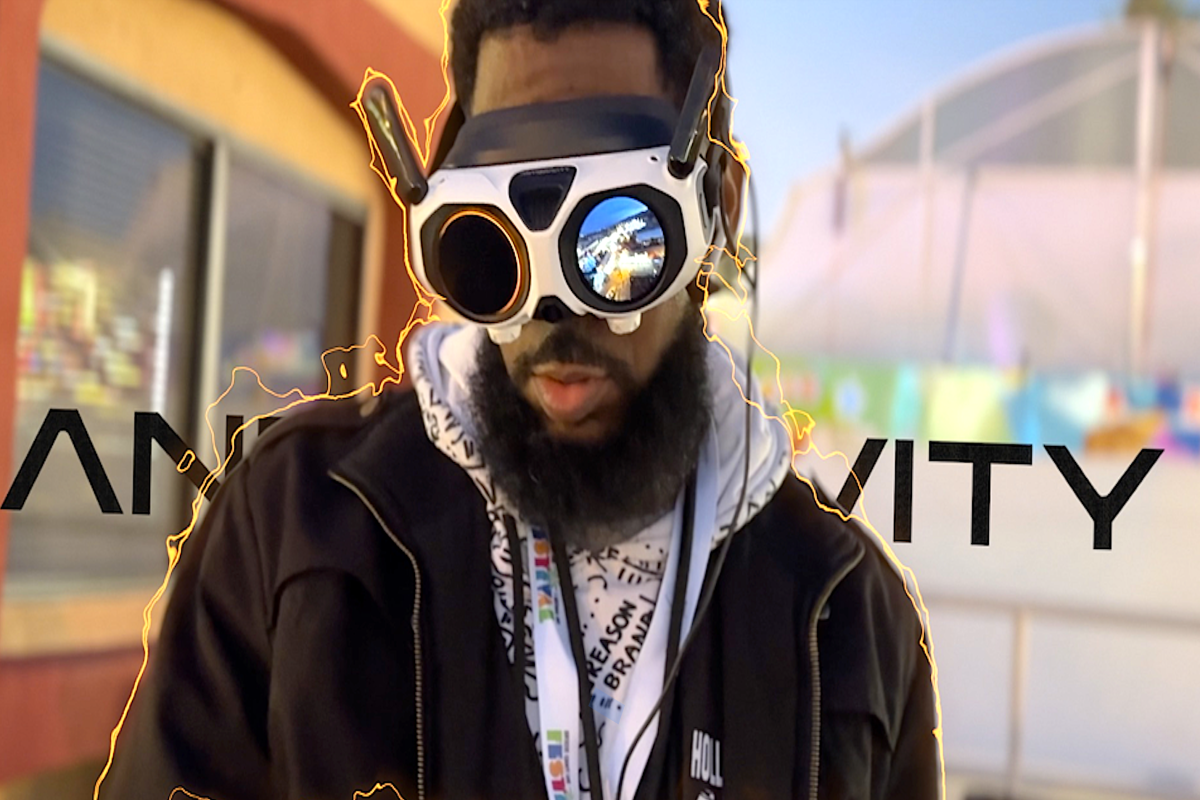
The Vision Goggles are arguably the most transformative component of the Antigravity A1 system. Equipped with high-resolution micro-OLED displays, head tracking, diopter adjustments, HDR playback, and passthrough functionality, the goggles place the operator inside the captured environment. Turning your head allows you to look freely around the 360-degree field of view without physically rotating the aircraft. This design choice fundamentally changes the way aerial perspective is experienced.
For me, this aspect carries personal significance. I have only seen out of one eye since birth, which has shaped how I interpret depth and spatial awareness. I was genuinely curious how an immersive 360 system would translate through my visual limitations. Surprisingly, the motion-based spatial cues and full-field viewing environment made navigation feel intuitive and natural. The ability to explore space visually before committing to framing decisions during editing enhanced both my confidence and creativity. It is a testament to how thoughtfully the A1 was engineered with user accessibility in mind.
grip motion controller
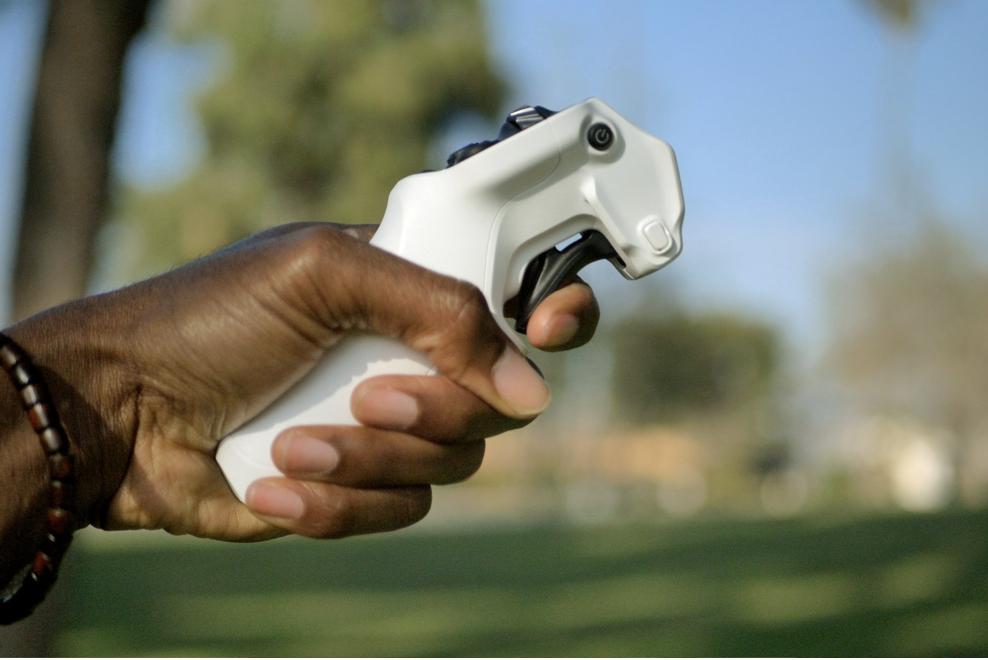
Control of the aircraft is handled through the Grip motion controller rather than a traditional dual-stick transmitter. Pilots point to direct movement, tilt to bank, and use trigger-based input for forward motion. Beginners often adapt quickly because the system mimics natural body movement. Experienced pilots, however, must retrain years of muscle memory. The only adjustment I continue to work through is becoming fully comfortable with button placement on the controller. With time and repetition, this becomes second nature, but it does require patience.
intelligent flight modes
The Antigravity A1 includes several intelligent flight and capture modes that further distinguish it within the consumer drone market. Sky Path allows users to predefine flight trajectories. Sky Genie utilizes artificial intelligence to generate cinematic camera movements automatically. Deep Track provides advanced 360-degree subject tracking, while Free Flight enables manual motion-based navigation. Follow mode dynamically locks onto moving subjects, and built-in safety systems assist with return-to-home procedures and obstacle awareness. Each mode reinforces the drone’s purpose as an immersive storytelling device rather than a precision instrument for technical surveying.
mobile and laptop editing
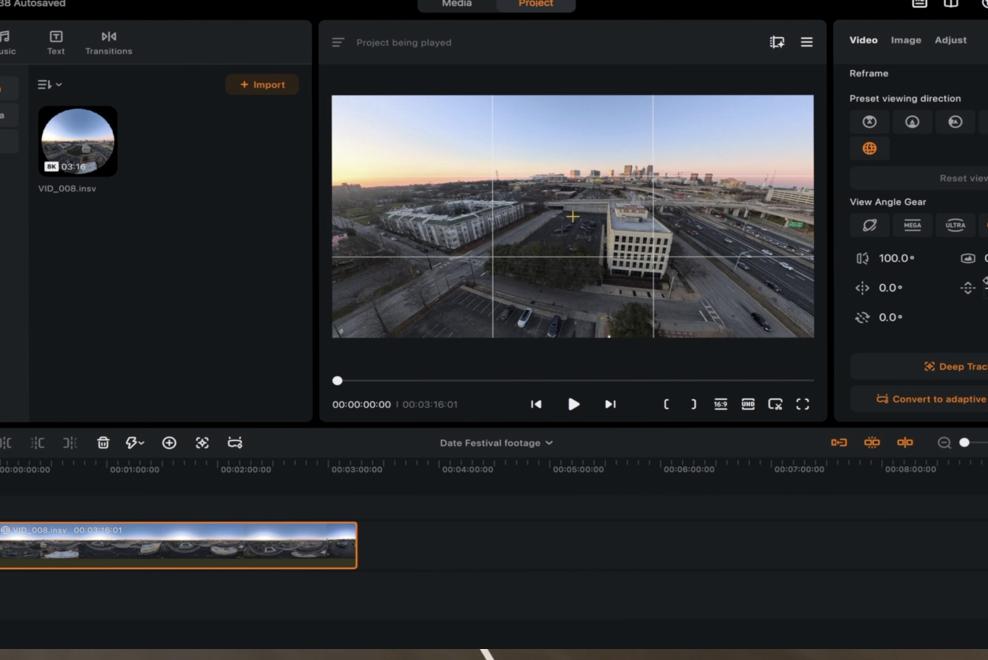
Editing plays a central role in the A1 ecosystem. The mobile app allows for quick reframing, AI-assisted tracking, and fast exports optimized for social media distribution. This is ideal for content creators who prioritize speed and agility. For more refined projects, desktop software expands creative flexibility with precision keyframing, advanced stabilization controls, and detailed camera path adjustments. The ability to capture once and generate multiple perspectives from a single flight significantly enhances efficiency for solo creators and commercial operators alike.
From an SEO perspective within the evolving drone industry, the Antigravity A1 occupies a unique space among 8K drones, 360-degree aerial cameras, immersive FPV alternatives, and next-generation content creation tools. For readers searching for the best 8K 360 drone, innovative consumer drone technology, or immersive drone flight systems, the A1 stands apart because it prioritizes experience as much as resolution. It does not compete directly with traditional DJI camera drones or FPV racing platforms. Instead, it establishes a new category focused on accessibility, spatial immersion, and post-production freedom.
trepidation to thrills
The most compelling feedback I observed came from others who tried the system. Each person who put on the goggles expressed genuine excitement. The fear often associated with flying drones was replaced by curiosity and engagement. The system reduces technical intimidation and increases creative confidence. That universal reaction speaks volumes about its design philosophy.
The Antigravity A1 is not intended to replace every drone in a professional kit. It is not optimized for mapping, industrial inspection, or highly technical cinematography requiring full manual exposure and lens control. Its purpose is different. It is designed to capture presence, perspective, and experience. It reduces the burden of technical execution so creators can focus on narrative and exploration.
As drone technology continues to evolve, innovation will not be defined solely by higher resolution or longer flight times. It will be defined by how effectively tools expand human creativity. The Antigravity A1 represents a meaningful step in that direction. It challenges pilots to think differently, to explore rather than chase, and to capture first before deciding how a story should be told. For creators willing to embrace that shift, the result is not just footage, but a new relationship with the sky.
WATCH MY VIDEO REVIEW: This Drone Rewires Your Brain