
12 January 2026
As Vigilant Aerospace reflects on 2025 and look ahead to 2026, we are energized by the momentum across the uncrewed aircraft systems (UAS) and advanced air mobility (AAM) industries. The past year marked a clear inflection point as the sector continued its accelerated shift toward integrated airspace operations and automated safety, supported by growing confidence that scalable, routine flight operations are now within reach.
Across the industry, this shift has created renewed urgency and strong market pull for autonomous safety solutions. Operators, regulators, and infrastructure providers are increasingly focused on ground-based and onboard systems that combine multiple sensors, advanced edge computing, and sophisticated algorithms to deliver intelligent, integrated, and automatic safety capabilities. These solutions are needed both locally at remote deployment or operations sites and onboard the aircraft to enable greater situational awareness, better coordination, and increasingly autonomous safety decision-making.
A New Phase in Integrated Airspace Safety
At Vigilant Aerospace, we saw heightened emphasis among government and commercial stakeholders on validated, standards-aligned safety systems. At the same time, long-anticipated commercial programs began coming online, FAA rulemaking progressed, and international competition continued to accelerate, making 2025 a defining year for planning, growth, and execution.
In response, Vigilant continued to meet evolving requirements with FlightHorizon PILOT, our onboard detect-and-avoid (DAA) system, and FlightHorizon TEMPO, our networked, ground-based airspace management platform. Throughout the year, we expanded deployments for testing and operational use across civil, defense, and AAM customers, helping partners move from evaluations into broader operational planning.
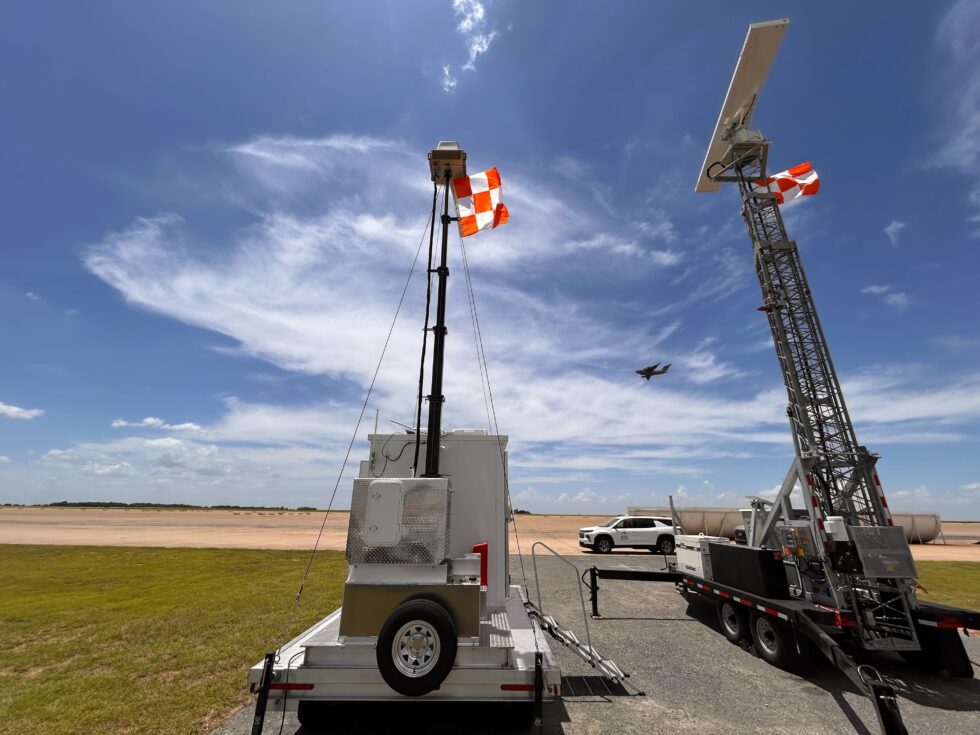
Much of 2025 built on the momentum established in 2024, including continued progress on the first phase of Oklahoma’s new large-scale airspace management system, centered at the Oklahoma Air and Space Port in western Oklahoma. This milestone reflects a broader trend: regional investments in integrated airspace safety infrastructure to enable scalable operations for UAS and emerging AAM aircraft. Equally important was the continued advancement of FlightHorizon PILOT, originally customized for military use in 2024 under an Air Force Research Laboratory contract, and now increasingly in demand among civilian and commercial operators as well.
Changing Frontiers
We also saw new frontiers open rapidly for the commercial small UAS sector. With the FAA’s publication of the Part 108 Notice of Proposed Rulemaking (NPRM), aimed primarily at enabling beyond visual line of sight (BVLOS) flight for small UAS, the industry now has a tangible pathway toward a transformation comparable to the impact of Part 107 in 2016. In parallel, the Part 146 NPRM outlines a path forward for networked air traffic surveillance services of the kind Vigilant Aerospace has been developing and deploying for years. Together, these are strong signals of advancement and opportunity, and they reinforce the need for trusted, validated, standards-aligned safety capabilities across the ecosystem.
In 2025, we also saw significant growth in demand for onboard detect-and-avoid systems, driven in part by increasing development and operational use of Group II and Group III UAS. These aircraft are enabling longer flight durations and carrying the payload required for onboard safety systems, and the industry is increasingly recognizing that onboard DAA will be essential to unlocking routine, scalable access to U.S. airspace. For Vigilant Aerospace, this positions FlightHorizon PILOT as a key element in complete operational strategies for a broad range of UAS and AAM operators and manufacturers. We are seeing increasing interest in our ability to integrate, deliver, and support these onboard solutions.
Many years of planning and development quietly came to fruition over the past year, and we anticipate more of that work will be ready to announce publicly in 2026.
Most importantly, we want to thank our customers, partners, and collaborators for their trust, shared commitment, and continued leadership in advancing safe, scalable flight. The progress of 2025 reflects what is possible when industry and government work together with a common mission: enabling integrated airspace operations that are not only innovative, but demonstrably safe. We look forward to building on this momentum with you in 2026, and to delivering the systems, standards alignment, and operational readiness that will define the next era of UAS and AAM growth.