
26 June 2026
U.S. Transportation Secretary Sean P. Duffy and FAA Administrator Bryan Bedford today announced that the FAA has awarded a contract to Air Space Intelligence (ASI) for two complementary, cutting-edge technologies that will improve how flights are scheduled and managed throughout the National Airspace System.
The Flow Management Data and Services (FMDS) will be the new technological backbone of the FAA’s Air Traffic Control System Command Center. It balances air traffic demand with capacity and provides the data that underpins traffic management. Strategic Management of Airspace, Routes, and Trajectories (SMART), an enhancement within FMDS, will use that data to prevent congestion and delays by strategically coordinating schedules and trajectories before aircraft depart.
Together, these technologies will:
- • Reduce flight delays
- • Improve traffic flow
- • Increase airspace capacity
-
The Problem
While very safe, our National Airspace System (NAS) could be more predictable, efficient, and optimized to use available capacity.
The current NAS operation has a limited ability to anticipate the effects of the number and timing of forecasted flights and the effects of unplanned events such as weather, runway closures, and other capacity limits. Additionally, it doesn’t identify and take advantage of large amounts of available airspace. We react to, rather than predict, these constraints, resulting in bottlenecks throughout the day, which have ripple effects throughout the entire country.
Compounding the situation, the data controllers rely on – from weather patterns to airport capacity – are all housed in different systems. Controllers often have to use numerous screens and spreadsheets to access this crucial information.
The Solution
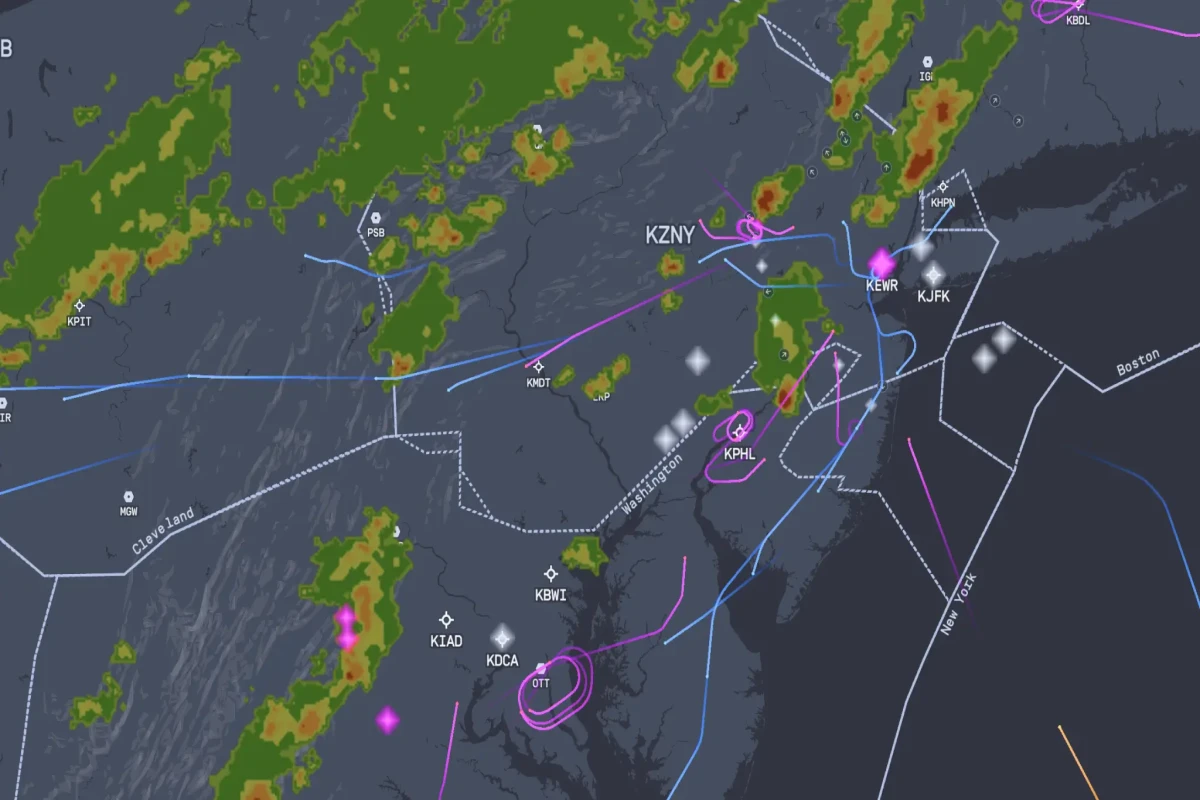
With these two new technologies, the FAA can house all critical data in one platform and proactively identify delays and available airspace to mitigate them days, weeks, and even months in advance. These systems will also allow controllers to overlay weather patterns and flight paths into one central visualization.
“We’re already making remarkable progress on upgrading the radars, radios, and telecom wires air traffic controllers rely on thanks to the Working Families Tax Cut. But to really improve the flying experience for the traveling public, we must change how flights are managed,” said U.S. Transportation Secretary Sean P. Duffy. “We’re thrilled to partner with ASI to begin developing these two new software platforms. Once implemented, we will fundamentally reshape how the airspace is managed – slashing thousands of delays and cancellations in the process.”
“Every day, our air traffic professionals knowingly manage thousands of scheduling conflicts across the National Airspace System, which ultimately end up as delays for the traveling public,” said FAA Administrator Bryan Bedford. “FMDS with the SMART capabilities will help us address that challenge by improving how we manage airspace before flights depart, reducing congestion, easing controller workload, and directly cutting down delays across the system.”
“We are grateful for Secretary Duffy’s and Administrator Bedford’s leadership and dedication to deliver President Trump’s vision of a modernized air traffic control system,” said Chris Sununu, CEO of Airlines for America. “SMART leverages the latest technologies to make air traffic more efficient and timely while maintaining our gold standard of safety. This program is an encouraging step forward and demonstrates how the FAA is making worthwhile investments in our airspace infrastructure. Airlines are coordinating closely with the FAA to ensure SMART will provide more efficient routings and more predictable information about system capacity in order to balance capacity and demand. We appreciate the FAA’s willingness to work with airlines to ensure this program provides benefits to the traveling and shipping public. A program of this kind has been talked about for decades, and this administration is finally taking action.”
“President Trump, Secretary Duffy and Administrator Bedford are delivering on their commitment to build the future of American aviation,” said Phillip Buckendorf, CEO, Air Space Intelligence. “This is an exciting moment for the millions of Americans who rely on air travel every day and for the airlines, airspace operators, and aviation stakeholders who keep our system moving. The FAA is embracing commercially proven technology already helping everyone from major airlines to the broader aviation community operate more efficiently and predictably. ASI is honored by the opportunity to support America’s Air Traffic Controllers and contribute to a safer, more predictive and more efficient national airspace system.”
Background on SMART
SMART continuously analyzes airline schedules, weather, airport capacity, airspace conditions, and operational constraints to predict traffic flows and identify potential conflicts before they occur. This shared view helps the FAA, airlines, and operators align on the most efficient routes and departure and arrival times, improving efficiency, predictability, and system-wide performance.
Background on FMDS
FMDS analyzes flight plans, airline schedules, and real-time position updates to estimate both current and anticipated traffic flows and capacity limitations across the National Airspace System. Managers at the FAA Command Center will use FMDS to adjust flight schedules and trajectories to manage congestion.
FMDS also uses real-time predictive modeling to orchestrate highly localized flight reroutes around severe weather constraints, reducing disruption to the flying public.
It also streamlines the exchange of live data between the FAA and airspace users, supporting collaborative decision-making to achieve the most optimal routing.