
12 June 2026
Exterior cleaning has always been a good business with a bad bottleneck: height. Anything above two or three stories means lifts, swing stages, rope-access crews, scaffolding permits, and insurance premiums that climb fast. Drone cleaning removes that bottleneck. A purpose-built cleaning drone tethered to a ground-based pump can soft wash a five-story facade, rinse windows, or clean a stadium while every member of the crew keeps their boots on the ground.
That combination (lower risk, faster jobs, and a service most building owners have never seen before with cool drone technology) is why drone washing is one of the fastest-growing niches in commercial cleaning. Here is what it actually takes to start a drone cleaning company, step by step.
Step 1: Understand the Opportunity
Drone cleaning is not a replacement for all pressure washing; it is a high-margin specialty layered on top of it. The sweet spots are jobs that are expensive, slow, or dangerous to do by traditional means: mid-rise and high-rise building exteriors, commercial roofs, solar panels, water towers and tanks, stadium structures, bridges, and signage. On these jobs, drone operators routinely quote a fraction of the cost of scaffolding or rope access while finishing in a fraction of the time.
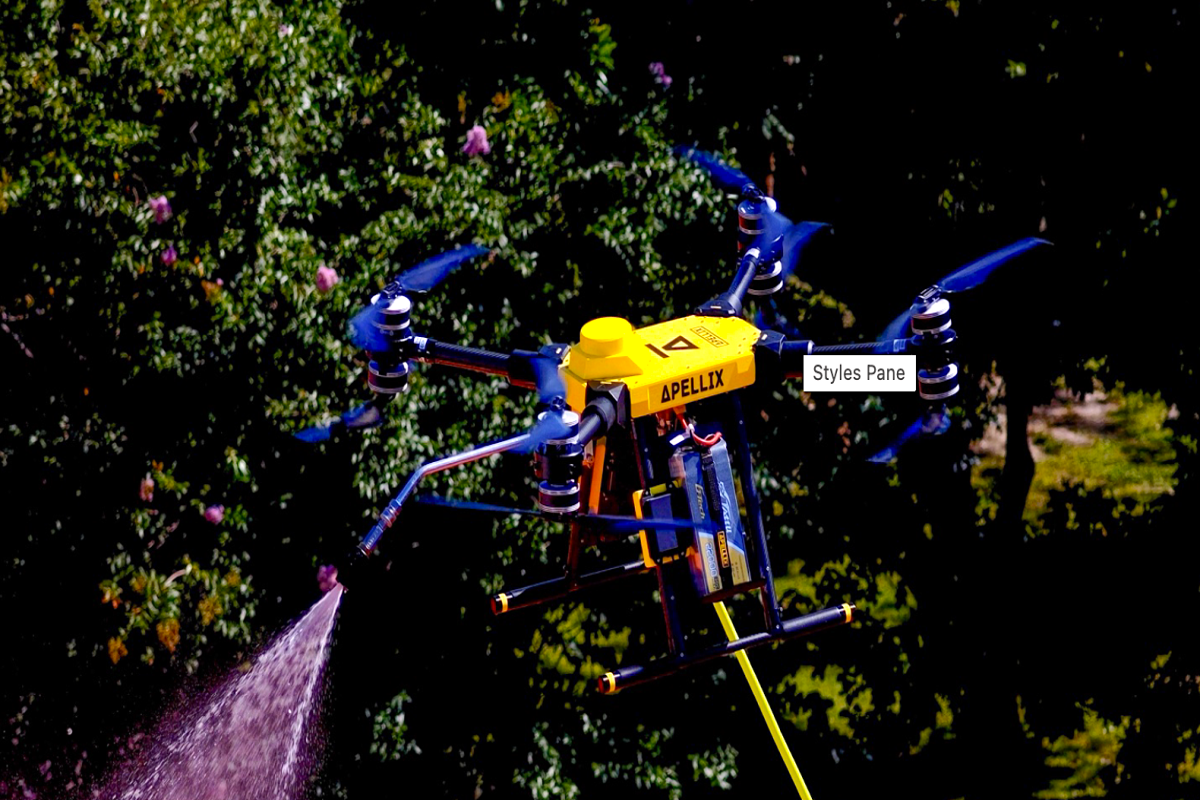
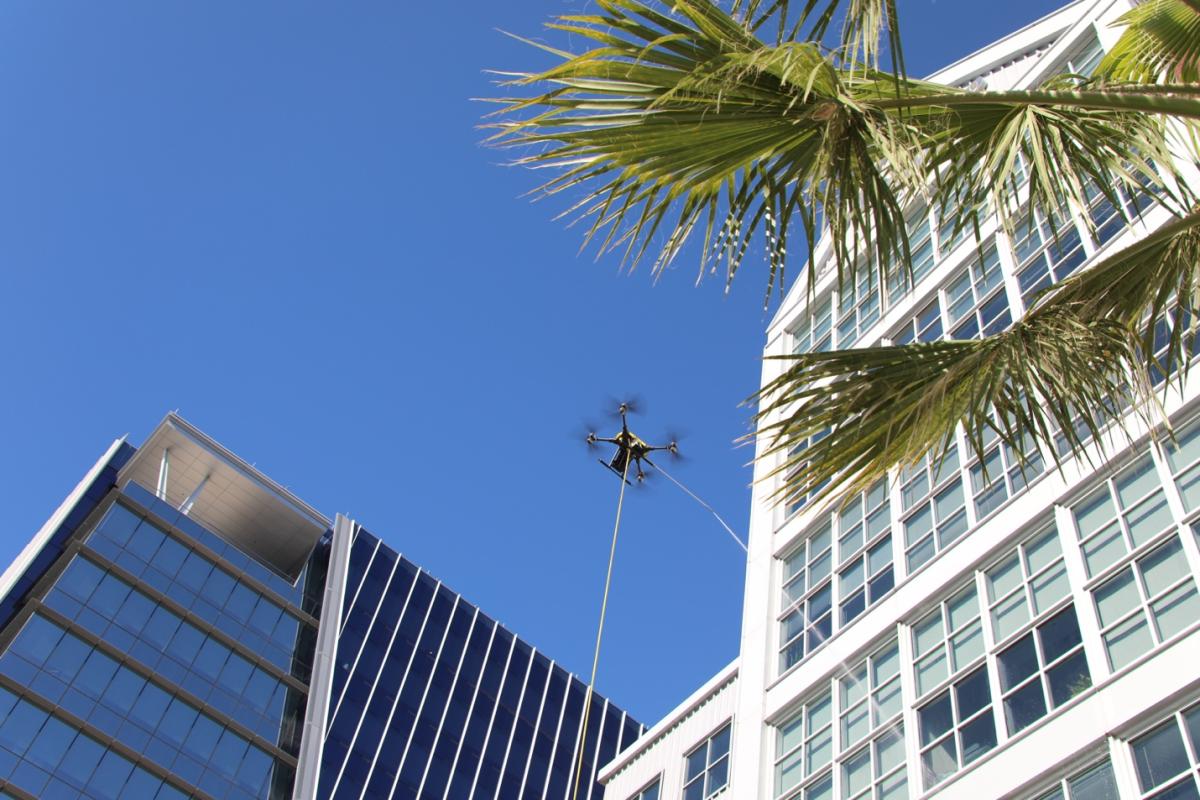
To see how much faster drone cleaning can be, look at this job from CleanFlight Solutions. CleanFlight Solutions, commercial cleaning drone pilots in South Florida, cleaned the Raymond James Headquarters in St. Petersburg in 11 hours over two-days compared to the 11 days that traditional window cleaners required to do the job. 11 hours compared to 11 days is a 90% reduction in time spent cleaning and was made possible with the Apellix Power Wash Drone.
Your likely customers are commercial property managers, facility directors, solar operations and maintenance (O&M) companies, HOAs with large common structures, and general contractors. Many established window cleaning and pressure washing companies are also adding drones as a service line, which means you can enter this market either as a new venture or as an expansion of an existing exterior cleaning business.
Step 2: Get Licensed and Legal
In the United States, any commercial drone operation requires an FAA Part 107 Remote Pilot Certificate. You earn it by passing a knowledge exam covering airspace rules, weather, loading, and operating requirements. Plan on a few weeks of study; online prep courses make the exam very passable for a motivated beginner. Each pilot flying for your company needs their own certificate.
Beyond Part 107, you will need to register each drone with the FAA, comply with Remote ID requirements, and check for local restrictions — controlled airspace near airports may require LAANC authorization before you fly. Heavier spray drones may exceed the 55-pound threshold once loaded, which can require additional FAA exemptions, so confirm the operating weight of any platform you buy and what approvals its manufacturer has already secured.
Set up the business basics, too: an LLC or similar entity, a contractor or pressure washing license if your state or city requires one, and any water discharge or runoff permits that apply to exterior cleaning in your jurisdiction.
You can take online courses to help you pass your FAA 107 like this course from Drone Launch Academy.
Step 3: Choose Your Equipment
Your drone is your biggest startup decision and, for most entrepreneurs, the biggest line item. The major purpose-built cleaning platforms differ widely on price, reach, autonomy, training, and regulatory compliance — and compliance matters more than it used to. NDAA compliance (drones free of certain foreign-made components) is required for government contracts in the U.S., and all foreign-made platforms like DJI are no longer available to purchase new in the U.S. market as of December 2025.
The chart below compares the leading options head to head:
Cleaning Drone Platform Comparison
|
|
Lucid Bots Sherpa |
Apellix B2 / Blue |
DJI Matrice 300 RTK |
Aquiline AD Endure |
KTV Working Drones |
|
Origin |
U.S. |
U.S. |
China — no longer available for purchase in the U.S. unless purchased used |
U.S. |
Norway — no longer available for purchase in the U.S. unless purchased used |
|
Price |
$65,000 |
B2 model: $47,000; |
$8,000 + additional spray equipment |
Not published |
Available as franchise package |
|
NDAA compliant |
Yes — has NDAA compliant model |
Yes — has NDAA compliant model |
No |
Unclear |
No — built on Chinese-made DJI airframes |
|
Max reach |
150 ft |
195 ft |
Depends on spray system installation |
600 ft (stated by Aquiline — noted as seemingly impossible given weight) |
Similar to DJI base |
|
Weight |
34.2 lbs with batteries |
B2: 31.5 lbs with batteries |
13.9 lbs with batteries + added sprayer weight |
40.2 lbs with batteries |
Similar to DJI base + added sprayer weight |
|
Autonomy |
No |
Waypoint flight planning |
No |
Similar to DJI base |
|
|
Training included |
Remote included for first operator, afterwards $100 per operator; hands-on is $1,500 for 1–2 operators and $2,500 for 3 operators |
Remote + hands-on included for multiple operators. Click here to read about Apellix Academy, Apellix’ free remote training platform. |
Not included / not specified |
No remote training; up to 2 people hands-on at Connecticut headquarters |
Included |
|
Pressure |
Up to 4,500 PSI |
Up to 4,000 PSI |
Depends on alteration |
Up to 3,300 PSI |
Up to 2,500 PSI |
|
Battery time |
Up to 19 minutes per Lucid Bot’s FAQ |
Up to 32 min per Apellix’ FAQ |
Up to 31 min (max 6 lb payload) |
Not published |
Not published |
- ** As of this article’s publication date the DJI Matrice 300 RTK is no longer available for purchase in the U.S.
A few things to weigh as you read the chart. A retrofitted camera drone is the cheapest way in, but you give up purpose-built reach, supported spray systems, and NDAA compliance, and the ability to buy new in the U.S. Purpose-built platforms cost more up front but come with manufacturer training, higher working PSI, and autonomy features can reduce pilot workload and tighten the consistency of your results. The lighter the drone airframe also means the higher you can fly before hitting the FAA’s 55lb weight class limit. Whichever direction you go, remember the drone is only part of the kit: budget for a trailer or van, a ground-based pump and tank system, hoses, chemicals appropriate for soft washing, which usually costs around $30,000.
Step 4: Get Insured
Drone liability insurance is non-negotiable; most commercial clients will not let you on site without proof of coverage, and $1–2 million in aviation liability is a common floor for building work. You will also want hull coverage for the aircraft itself, general liability for the business, and workers' compensation once you hire. Insurers that specialize in unmanned aircraft generally price coverage based on pilot experience and the platform you fly, so document your training and flight hours from day one.
Step 5: Price Your Services
Drone washing commands premium pricing because you are not selling cleaning — you are selling the elimination of lifts, scaffolds, road closures, and fall risk. Many operators price per square foot of facade or per panel for solar work, with day rates for complex structures. When you quote, anchor against the client's alternative: if rope access would cost them $30,000 and three weeks of disruption, a $12,000 two-day drone job is an easy yes and still an excellent margin for you. Early on, it pays to walk every bid site, because overspray control, water access, and airspace can each change your costs.
Step 6: Find Your First Customers
The good news about a novel service is that a demonstration sells it better than any brochure. Offer demo cleanings to property management firms, join local BOMA and IFMA chapters where facility managers gather, and partner with window cleaning and pressure washing companies that get requests for work above their reach. Solar providers are an especially strong early niche, since soiled panels measurably reduce energy output and arrays are tedious to clean by hand. Capture video of every job. Aerial cleaning footage is inherently shareable and does most of your social media marketing for you. Also ask your drone manufacturer if they have any free marketing content you can use to set up social media or websites. Some brands, like Apellix, include free marketing content with drone purchase to help power washing entrepreneurs start their business.
Step 7: Train, Practice, and Scale
Passing the Part 107 exam makes you legal; it does not make you good. Take advantage of whatever manufacturer training comes with your platform, then put in hours on low-stakes surfaces before you accept a job on glass forty feet up. Autonomy features that take some of the workload off the pilot also help here. Develop checklists for site assessment, battery management, tether and hose handling, and emergency procedures. Once your first crew is consistently profitable, scaling is mostly a matter of adding aircraft and certified pilots — the demand side, for now, is far ahead of the supply of qualified operators.
The Bottom Line
A drone cleaning business can realistically launch for the cost of a well-equipped service truck, a Part 107 certificate, a purpose-built cleaning drone, and insurance. What it buys you is entry into a market where the work is visible, the differentiation is obvious, and the traditional alternatives are slow, dangerous, and expensive. Start with the licensing, choose your platform carefully using the comparison above, and let your first few jobs film themselves.
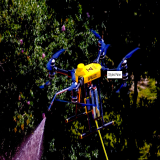
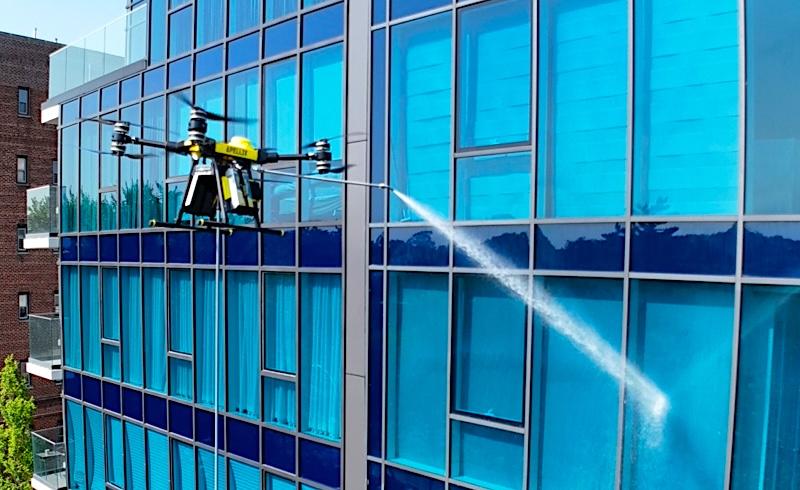
Watch an Appellix B2 Cleaning Drone in Action