16 April 2026
Entering the drone industry wasn’t something I set out to do initially. It came from a combination of career changes and a growing interest in how aerial work could be applied beyond just visuals.
My background is in graphic design and visual work. Over time, I started noticing changes in that industry. The landscape was becoming more competitive and unpredictable, and it became clear that I needed to start thinking about new directions and opportunities where my skill set could still be applied in a meaningful way.
Around that time, my cousin Devin mentioned drone training to me in passing and sent over a link to a program through UAV Coach. At the time, I looked into it but didn’t pursue it right away. It was interesting, but it wasn’t something I was in a position to commit to yet.
The idea stayed in the back of my mind.
A major turning point came through conversations at home. My wife encouraged me to take a closer look at the opportunity and consider what it could lead to. She saw potential in it before I fully did. That encouragement played a big role in me deciding to move forward and explore it more seriously.
Around the same time, I had the opportunity to work as a contractor with the Oregon UAS Accelerator. My role there involved working with startup founders, helping them refine how they presented their ideas. That meant taking complex concepts and helping shape them into clear, concise, and impactful messaging.
Being in that environment gave me a different perspective on the drone industry. I was able to see how these technologies were being developed to solve real-world problems, not just for visuals, but for inspection, mapping, and operational use. That exposure made the industry feel more real and more applicable.
From that point, I decided to commit to it.
The first major step was preparing for the FAA Part 107 exam. I approached that seriously. I studied consistently, using resources from UAV Coach and Mike Sykes, both of which were extremely helpful in breaking down the material and preparing for the test.
There was a clear standard I held myself to during that process. I wasn’t interested in just passing. I wanted to be confident in the material before sitting for the exam. That meant putting in the time to understand airspace, regulations, and how everything fits together in real-world operations.
When I took the exam, I passed with a 92 percent score. That was an important milestone, not just because of the certification, but because it marked the point where I had built a solid foundation to move forward.
From there, the next step was getting hands-on.
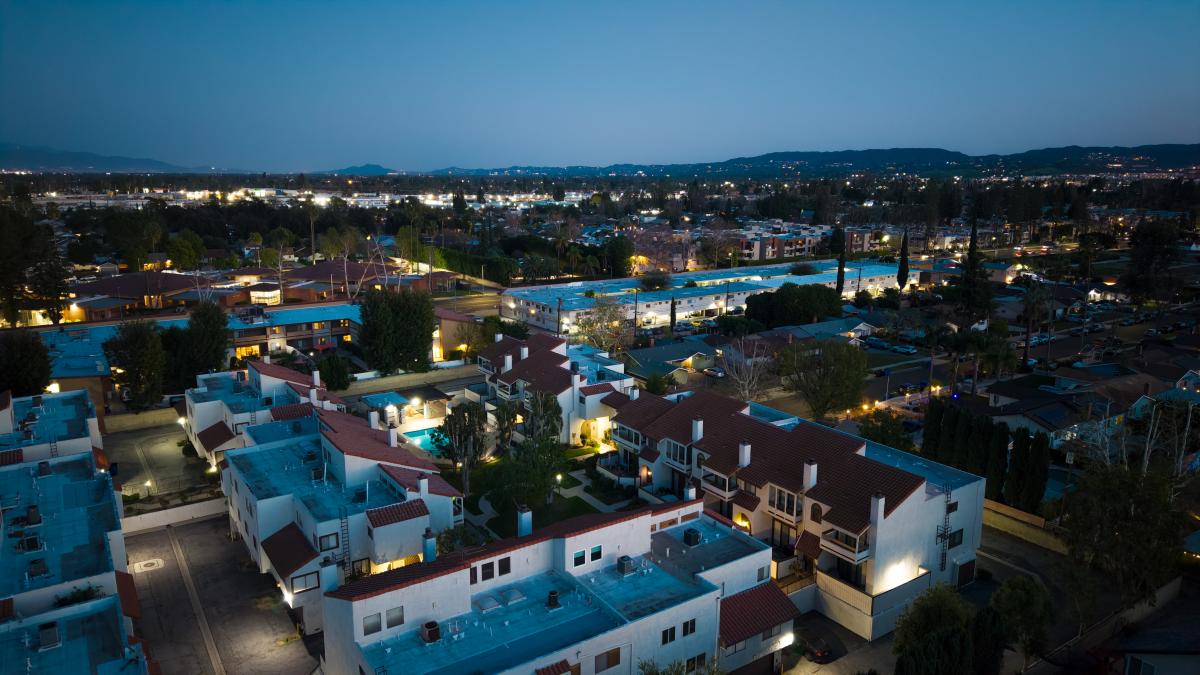
I invested in my equipment and began focusing on building real-world experience. Instead of waiting for formal training opportunities, I took a practical approach. I went out to open areas and business parks and began practicing, always making sure to operate within regulations and check airspace before every flight.
Using tools like LAANC became part of my routine early on. Even in areas that appeared straightforward, I made it a habit to verify conditions and stay compliant. That process of planning, checking, and executing became part of how I operate.
As I spent more time flying, my focus started to shift beyond just operating the drone.
I became more interested in how aerial capture could actually be used. Not just for visuals, but for understanding environments. That led me toward inspection-style work, including roof visibility, HVAC systems, and general property documentation.
That’s where Aerial SkyWorx began to take shape.
The goal is to provide clear, structured aerial data that can be used by property owners, facility teams, and contractors to better understand conditions without needing direct access. Whether it’s capturing roof layouts, identifying equipment placement, or providing a general overview of a site, the focus is always on usability.
My background in visual work plays a role here. It helps with framing, clarity, and making sure that what’s captured is not just visible, but actually useful.
Right now, I’m continuing to build experience, refine my process, and expand into real-world applications across commercial properties and job sites. Every project is approached with a focus on safety, compliance, and delivering consistent results.
This is still a growing process, but the direction is clear.
The goal is not just to fly, but to provide visibility where it matters and to do it in a way that supports real decisions on the ground.
That’s what Aerial SkyWorx is built around.
Watch