
29 May 2026
For the last several years, the conversation around DJI in the United States has been filled with accusations, speculation, political tension, and growing uncertainty. But now, DJI may have just shifted the entire conversation. And honestly, it’s getting difficult to ignore the awkward position this creates for the FCC and U.S. regulators moving forward. Because according to DJI’s latest public statements, the very security review required under the FY25 National Defense Authorization Act (NDAA) was apparently never completed by a U.S. government agency.
So DJI decided to do something unexpected. They commissioned an independent cybersecurity assessment themselves. And according to the results shared publicly by DJI, the findings raise some serious questions about where this entire situation goes next.
The Security Review That Apparently Never Happened
At the center of this latest controversy is DJI’s claim that no U.S. agency conducted the security review of DJI systems required under the FY25 NDAA. That alone is a pretty stunning statement.For years, concerns surrounding DJI drones have largely centered around fears of data security, foreign surveillance, unauthorized transmissions, and broader national security risks tied to Chinese-manufactured technology.
Those concerns have fueled: restrictions, political hearings, federal scrutiny, and DJI’s placement on the FCC Covered List.
But according to DJI, despite all of the concern and political pressure, the formal government-led security review still never took place. So DJI says it commissioned a U.S. based cybersecurity firm called OnDefend to conduct an independent assessment of two drone systems: the DJI Air 3S and the DJI Matrice 4E. And this is where things get very interesting.
What the Assessment Allegedly Found
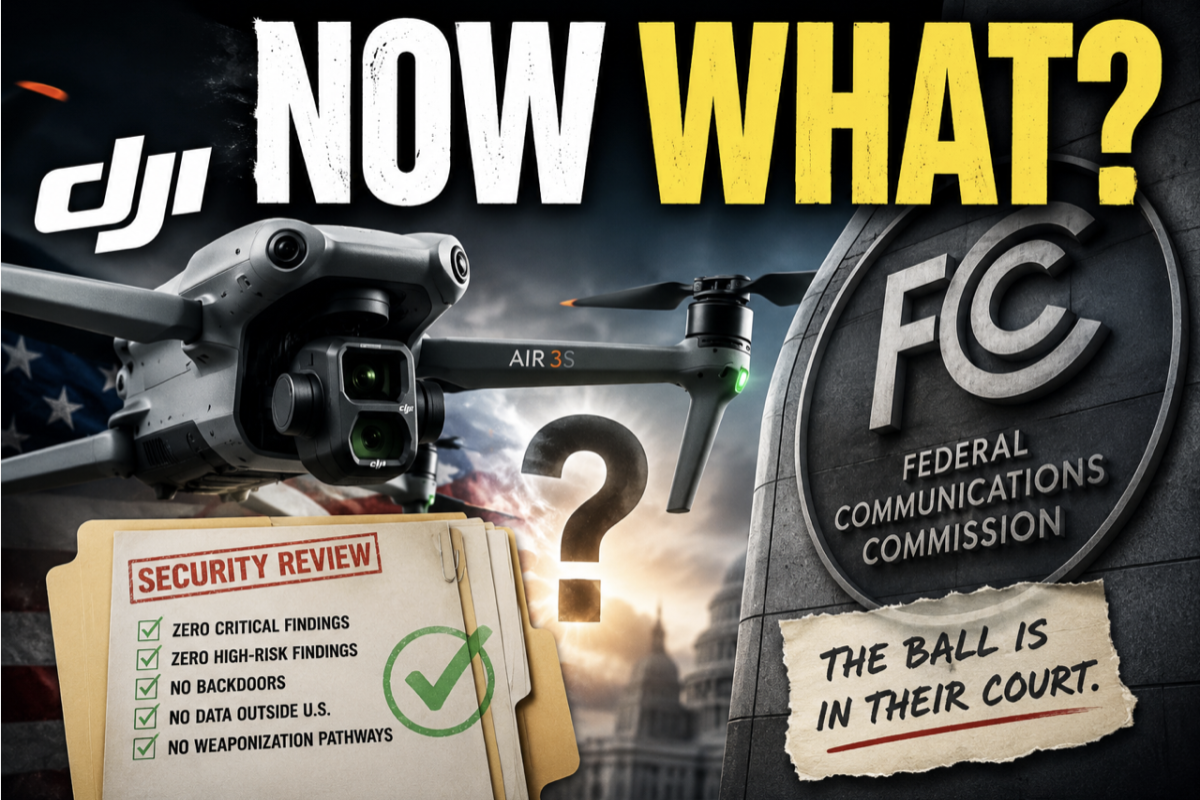
According to the information released publicly by DJI, the OnDefend assessment reportedly identified: zero critical findings, zero high-risk findings, and zero medium-risk findings.
The report also allegedly found:
- • No evidence of hidden backdoors
- • No suspicious data transmissions outside the United States
- • No unauthorized remote access mechanisms
- • No unexplained radio frequency emissions
- • No viable pathways for hijacking or weaponization
Now let’s be honest here. The first reaction many people are going to have is: “Well, DJI paid for the assessment.” And that is a fair criticism to raise. DJI anticipated that concern as well. According to the company’s public statements, DJI claims it had no control over the methodology, the findings, or the final report itself.
DJI also emphasized that OnDefend is an independent U.S.-based cybersecurity firm trusted by national security stakeholders.
Whether critics accept that explanation or not, the larger issue remains impossible to ignore: DJI is now publicly asking regulators and policymakers a direct question: If there are serious security risks associated with DJI drone, where is the technical evidence?
And right now, that question is becoming increasingly difficult to dismiss.
The Conversation Has Shifted
For a long time, the public conversation surrounding DJI has been driven more by suspicion than technical transparency. That does not automatically mean the concerns are invalid. National security absolutely matters. Technology scrutiny matters. Supply chain security matters.
But in a country that often emphasizes evidence based decision making, many drone operators, businesses, and creators are beginning to ask whether enough publicly documented technical evidence has actually been presented to justify the level of restriction DJI now faces.
And that is exactly the narrative DJI appears to be pushing with this latest campaign. The company is no longer simply denying accusations. Instead, DJI is strategically reframing the discussion.
The argument is no longer: “Trust us.”
The argument is now: “Show the evidence.”
That is a very different conversation.
Why This Matters Beyond the Drone Community
What makes this issue especially important is that DJI drones are not niche products used by a small group of hobbyists anymore. DJI systems are deeply integrated into real industries across the United States. Public safety agencies use DJI drones for: search and rescue, disaster response, wildfire monitoring, and accident reconstruction.
Farmers rely on drone technology for agricultural mapping and crop analysis. Construction companies use drones for site inspections and project documentation. Filmmakers and content creators depend on DJI systems because of their reliability, affordability, and advanced camera technology. Small business owners use DJI drones daily for: roofing inspections, real estate media, tourism promotion, surveying, and infrastructure analysis. For many operators, DJI has become the industry standard because the company consistently delivered technology that was: accessible, powerful, and competitively priced.
That is why these restrictions have created such strong reactions within the drone industry. For many professionals, this debate is no longer theoretical. It directly impacts livelihoods, workflows, equipment investments, and business operations.
The Political and Financial Side of the Conversation
Another reality that cannot be ignored is the economic opportunity created by anti-DJI regulation. As restrictions on Chinese drone manufacturers increase, American drone companies and defense-related technology firms stand to benefit significantly.
One company frequently mentioned in these discussions is Unusual Machines, a U.S. based drone and component company that has gained growing investor attention amid increasing pressure on DJI.
To be clear, this does not automatically imply corruption or some coordinated conspiracy. But it does highlight something important: Regulations create winners and losers. And when a dominant market leader faces restrictions, competitors naturally benefit from the resulting vacuum.
Investors understand this. Markets understand this. Policymakers understand this.
That reality does not necessarily invalidate national security concerns, but it does complicate the conversation. Because once economics, politics, lobbying, domestic manufacturing incentives, and investor interests all become intertwined, public trust becomes much harder to maintain. Especially when the technical evidence remains publicly unclear.
DJI’s Public Pressure Campaign
What DJI appears to be doing right now is incredibly strategic. Instead of quietly responding through legal filings or corporate statements, the company is now directly communicating with the public through simplified messaging campaigns, social media graphics, and public-facing summaries of the independent assessment.
And honestly, the messaging is effective.
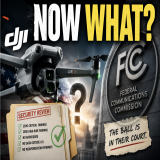
DJI is essentially saying: “You asked for a security review. We completed one. No serious issues were found. Now what?”
That places pressure directly back onto regulators and policymakers. Because if additional restrictions are going to be justified moving forward, many people will now expect clearer public explanations supported by verifiable technical findings. The longer that evidence remains vague or undisclosed, the more skepticism naturally grows.
A More Honest Conversation Is Needed
At this point, the DJI situation feels far more complicated than many people are willing to admit.If genuine security risks exist, they should absolutely be addressed transparently and seriously.But if concerns are also being influenced by: economic competition, domestic manufacturing goals, geopolitical tensions, and market incentives,
then that deserves honest public discussion too. Because right now, millions of consumers, creators, businesses, and public safety professionals are watching this situation unfold in real time.
And many of them are beginning to ask the same question: If the evidence is truly there why hasn’t it been clearly shown?
Until regulators fully answer that question, the controversy surrounding DJI is not going away anytime soon.
In fact, it may only be getting started.