
27 May 2026
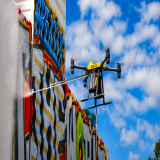
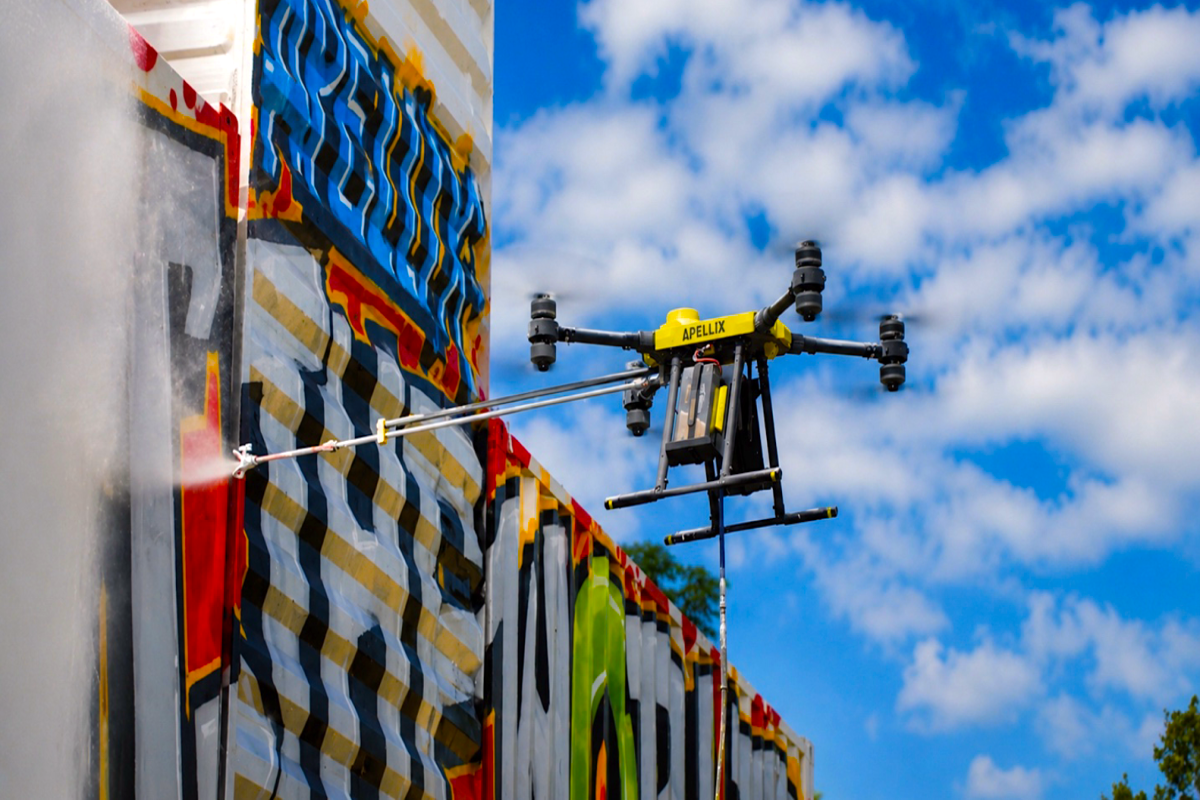
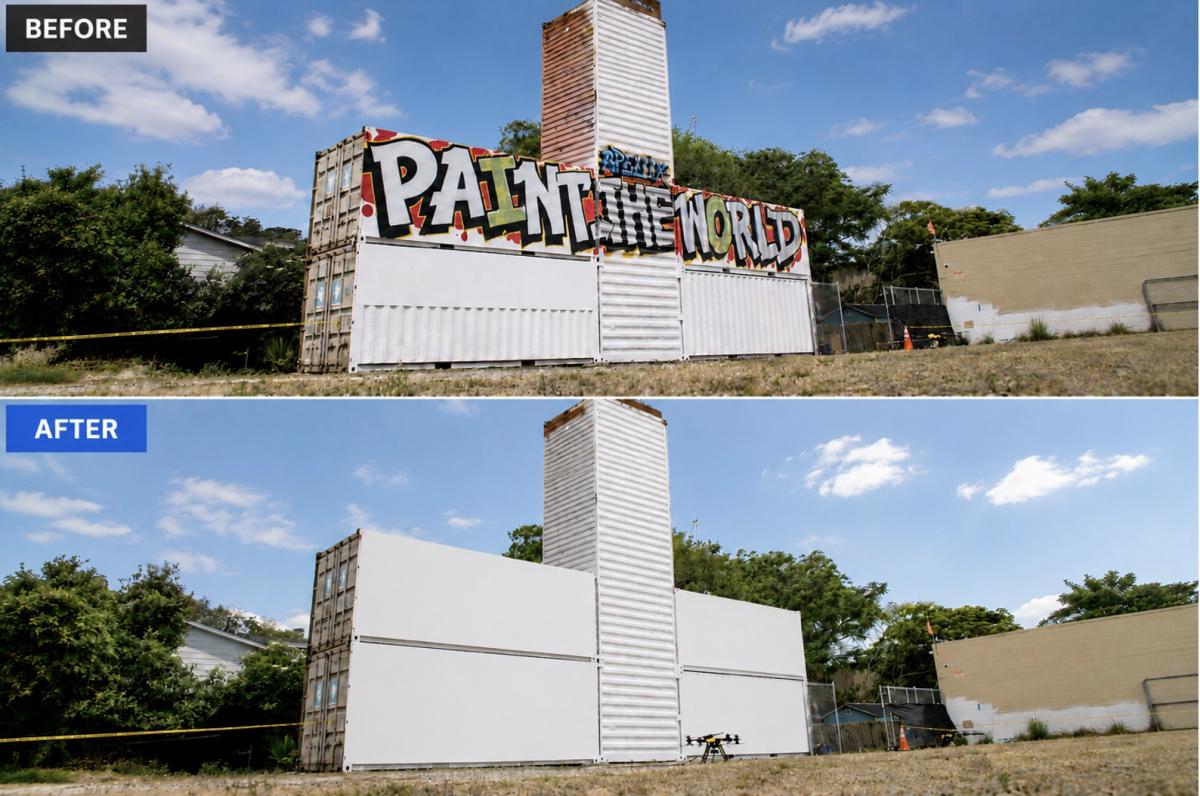
On May 1, 2025, Apellix hosted "Paint the World," its live demo day for the commercially available Spray-Painting Drone. A local artist tagged the company's shipping containers with high-reach graffiti, a job that took him hours on a ladder. In front of a large crowd that flew in for the event, the drone covered the entire container in minutes — with the drone operator staying safely on the ground.
Why Pilots Should Care
The drone-services industry has a math problem. Mapping and inspection rates have compressed as the pilot pool has grown, airframes have become cheaper, and deliverables have commoditized. The pilots who are still scaling their businesses are the ones offering services the airframe at Best Buy cannot perform.
Industrial coating is one of those services, and three factors make it a particularly attractive business line.
First, the customer has budget. Coating contractors, facility managers, state Departments of Transportation, federal infrastructure programs, and AMPP QP1-certified industrial firms already spend substantial sums protecting elevated steel. The coating itself is rarely the cost driver; lifts and scaffolding can account for as much as 70 percent of an exterior coating job. Any service that takes a meaningful bite out of that line item is something a customer will pay for.
Second, the pain point is tangible. Water towers, aboveground storage tanks, bridges, Amazon warehouses, container yards, and graffiti remediation are all real, recurring jobs for which mobilizing a lift or scaffold is expensive, slow, dangerous, or all three. DOT coating jobs on the side of a highway further incur traffic-control and lane-closure costs that an aerial applicator can sidestep entirely.
Third, the barrier to entry favors operators. A customer who wants to bring this work in-house must buy the platform, qualify pilots, obtain Part 107 certifications, and learn coating application. A commercial drone pilot who already flies for a living is most of the way there.
The Platform
Apellix is not new. Founded in 2014 in Jacksonville by Robert "Bob" Dahlstrom, the company has spent more than a decade building heavy-lift working drones — airframes purpose-built to perform real work. The company's commercial lineup includes the Power & Soft Wash Drone, now in service in five continents and 20+ countries and the Spray-Painting Drone that headlined in late 2025. Both are made in the USA, and with NDAA-compliant Apellix Blue variants, are why state DOTs, federal contractors, and U.S. military installations are part of the customer base today.
For pilots, the relevant pitch is the workflow. A drone operator offering aerial coating to a contractor is not pitching a single flight — they are pitching a sequence: clean the surface with the Power & Soft Wash Drone, then coat it with the Spray-Painting Drone. Two airframes from a single manufacturer, sharing a common control philosophy and a common training pipeline. That is a service offering, not a one-off.
Paint the World – with Drones!
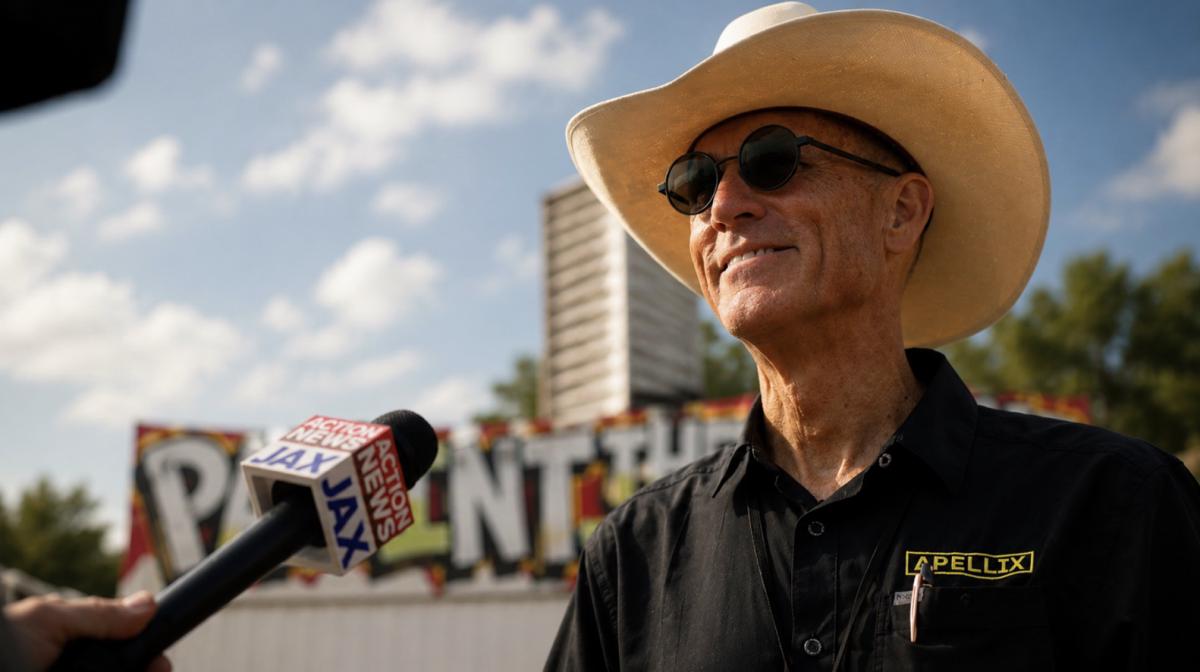
Dahlstrom opened the morning with a short briefing, bookending his remarks with a quote from Margaret Mead: "Never doubt that a small group of thoughtful, committed citizens can change the world; indeed, it's the only thing that ever has." It was a fitting line for a family-owned company collaborating with another family-owned company for the event. Apellix had partnered with Induron Protective Coatings, an Alabama coatings manufacturer, which supplied its newly released Indurabond — a dryfall acrylic mastic formulated for surface-tolerant overcoat work. A local Jacksonville news crew pulled Bob aside before the flying began.
The drone went up, and the autonomy stack that Apellix has spent over a decade making in-house kicked in.
The Spray-Painting Drone runs several proprietary behaviors that Apellix brands collectively as Apellix Intelligence (AI): distance hold, perpendicular alignment, and speed control are some. Translated for pilots: the airframe maintains a consistent standoff from the substrate, keeps the spray axis perpendicular to the surface, and regulates its own lateral travel speed during a pass. The pilot moves the aircraft up and down. The system even shuts the spray gun off automatically at the end of each pass. Coverage runs up to approximately 3,000 sq ft (≈280 m²) per hour, at heights up to 250 ft (≈76 m), in winds up to roughly 20 mph. The graffiti was gone in minutes.
Stick Time — and Why That Is the Business Story
What distinguished this event from a typical product demo: Apellix did not stop at the canned flight. The team rolled out the B2 Power & Soft Wash Drone, broke out hard hats, and put attendees on the sticks. First-time drone pilots were targeting specific zones on the container walls within minutes of coaching, including a member of the Induron sales team who had never flown a drone before in his life.
For anyone running a drone-services business, that is the bullet point worth underlining. The autonomy stack handles the hard part. The training curve for an experienced Part 107 pilot is short. Apellix bundles additional training through Apellix Academy, included for free with every drone. The contractor's existing trade qualifications — AMPP QP1, for example — cover the coating-application side. The pieces of the qualification chain already exist, and they stack on top of skills a commercial pilot already has.
After the last attendee landed the drone, Bob Dahlstrom thanked the room and repeated the Margaret Mead line he had opened with. The shipping containers behind him no longer said "Paint the World." They were blank and a freshly coated white.
About Apellix
Founded in 2014 in Jacksonville, Florida, Apellix designs and manufactures patented autonomous industrial drones for spray painting and power washing. Made in the USA. NDAA-compliant Apellix Blue variants are available for federal and state government work.
Watch DRONES "PaINT IT"