
20 May 2026
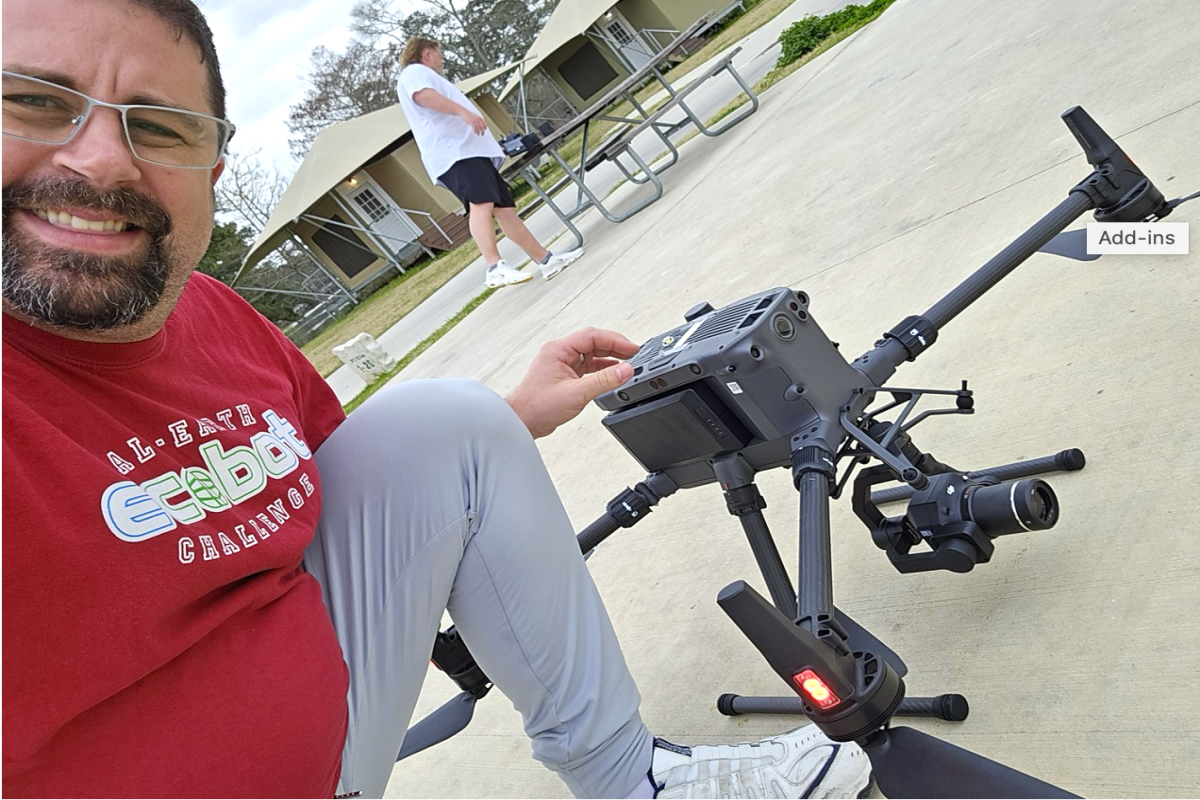
I have been a photographer since I was thirteen years old, and a cameraman, instructor, and producer ever since. But for most of my career, the sky was somewhere I could only borrow. Helicopters, when I could ride in them. Planes, when there was a window seat. The most interesting angle in any scene was the one I could never quite reach — until drones became real, affordable, and good enough for commercial work. This is the story of how a kid from Melilla, on the North African coast of Spain, ended up flying a DJI Mavic 3 Pro over Houston with a Hasselblad sensor strapped to its belly, telling stories from the sky for a client list that keeps growing.
Roots: Melilla, Madrid, and a Hasselblad earned in Andalusia
Melilla is a small Spanish city perched on the Mediterranean coast of North Africa — most people I meet in Texas have never heard of it. That is where I grew up, where I first picked up a camera, and where I first realized visual storytelling was going to be my whole life. I earned my Bachelor’s degree in Media Arts at Universidad Europea de Madrid, then a Master’s in Cinema Production. In my twenties I bought my first Hasselblad — paid for by a major photography commission I shot for the Sephardic community in Andalusia. The lenses on that Hasselblad were unforgettable. Decades later, when DJI built the Mavic 3 Pro around a Hasselblad sensor, it felt less like buying a drone and more like reconnecting with an old collaborator.
I have been a media instructor since the year 2000 — at a community college in Spain first, then teaching Media and Photojournalism at the high-school level in the United States. I first came to Houston in 2005, returned to Spain in 2008, and came back to Texas in 2016 to stay. The move was deliberate: a personal journey to expand my horizons and my children’s, in a city with one of the most dynamic visual-storytelling markets in the country.
Why drones, why now
Aviation has fascinated me my entire life. I read about aircraft physics for fun. I spend more time than I will admit in flight simulators. I admire pilots and aerospace engineers — I always have. Early in my career I worked as a cameraman for a TV station’s traffic-reporting helicopter, which sounds glamorous and absolutely was, except for one thing: the pilot flies the helicopter and you film whatever they let you film. Composition becomes a negotiation. Wind, fuel, route — none of it belongs to you.
Drones changed that completely. A drone pilot controls both the aircraft and the camera. Every move is an intentional choice, not a compromise with another flight crew. For a videographer who has spent thirty years thinking about framing, that shift is hard to overstate.
I started flying around ten years ago with cheap drones whose cameras were, to put it gently, forgettable. I used those early years to learn the controls and — more importantly — to internalize how a drone could move in service of a story. The cameras were terrible but the muscle memory was real.
Part 107: I built the course before I took the test
About three years ago, my company Spanish Adaptations LLC was contracted to design and produce a Part 107 prep course for high-school students, delivered through a learning management system. I built it: the curriculum, every video script, every quiz, every interactive resource. It took me a year and a half to complete the platform. By the time I finished, I had effectively spent eighteen months immersed in the FAA’s commercial small-UAS rules, sectional charts, weather minimums, and operational risk assessment.
When I sat for my own Part 107 exam, I scored a perfect 100. I did not miss a single question. The course we built — futuregroundschool.com — has since served more than 20,000 students with a 98% pass rate. These are sixteen-year-olds in U.S. high schools, not adult professionals with strong external motivation. I am proud of those numbers in a way that is hard to describe.
My first commercial drone, after certification, was the DJI Mavic 3 Pro — chosen specifically for the Hasselblad camera and the triple-lens system: a 24mm, a 70mm, and a 140mm. The kid who once paid for a Hasselblad with a single big shoot in Andalusia was suddenly carrying a Hasselblad on his backpack drone.
The work so far
My first paid drone job came through my audiovisual work for a large U.S. law firm with offices across the country. I traveled to each location producing marketing footage, and I built drone aerials into the standard package.
I have flown some shoots I will never forget. In Spain, I joined a group of drone operators on a search-and-rescue mission over the Strait of Gibraltar, where a small boat had gone missing — pilots methodically dividing the water into search grids, scanning for debris or any sign of the vessel. In Mexico, I shot aerials for an immigration documentary commissioned by an immigration law firm, capturing the border and the camps where families wait for their turn to apply for asylum. Closer to home, I have worked steadily with the Juan Solis Law Firm in Houston, producing orthomosaic maps of large residential neighborhoods after hailstorms and floods. The workflow is satisfying because it actually delivers results: my orthomosaics go to the inspectors, who flag the suspect roofs, and I return with a KMZ-driven autonomous mission to capture low-altitude, high-overlap retakes of the specific properties. The lawyers use that imagery to close insurance recovery cases for homeowners.
The bilingual angle is not theoretical. Houston is heavy on real estate, construction, and inspections, and Spanish is genuinely useful — for permissions, for site access, and most of all on roofing and agricultural sites where the workforce is predominantly Hispanic. Even when workers speak fluent English, being addressed in their own language opens doors a monolingual pilot cannot easily open.
I think of myself as a videographer first, and that shows up in the work. One job stands out as a small masterclass in why thirty years behind a camera matters. A client wanted aerial coverage of a billboard install with the Houston skyline as the backdrop. A default 24mm shot would have rendered the skyline so small it would be unrecognizable. I switched to the 140mm telephoto on the Mavic 3 Pro to compress the perspective and pull the skyline visually forward. The sun was setting right behind the buildings. I bracketed an HDR with six different exposure settings to hold the highlights in the sky and the shadows in the foreground. The final image is one of the best things I have ever shot — and it would have been impossible without knowing my lenses.
And once, a large bird attacked my drone mid-flight and tore one of the arms clean off. Somehow the aircraft landed safely. I had DJI Care Refresh still active, and a replacement arrived without drama. Lessons: birds are real, insurance is real, and a smooth landing is a gift.
The trifecta: pilot, producer, teacher
My drone work lives inside a broader ecosystem. Spanish Adaptations Group, founded in 2008, runs three divisions: Spanish Adaptations (language and content adaptation in Spanish and other languages), FutureSchool (curriculum and LMS development, built from the work that became futuregroundschool.com), and YAA Productions (audiovisual and drone media). All three talk to each other constantly. A recent example: a fumigation company hired me to produce drone footage that we turned into a 3D model of a property, so they could calculate volumetric measurements for planning their tarping operations. The results were so much faster than their manual workflow that they came back and asked me to train five of their sales agents to become drone pilots themselves. The job started as a media gig and ended as a workforce-development contract. That is what it looks like when pilot, producer, and teacher work under one roof.
Where I am going
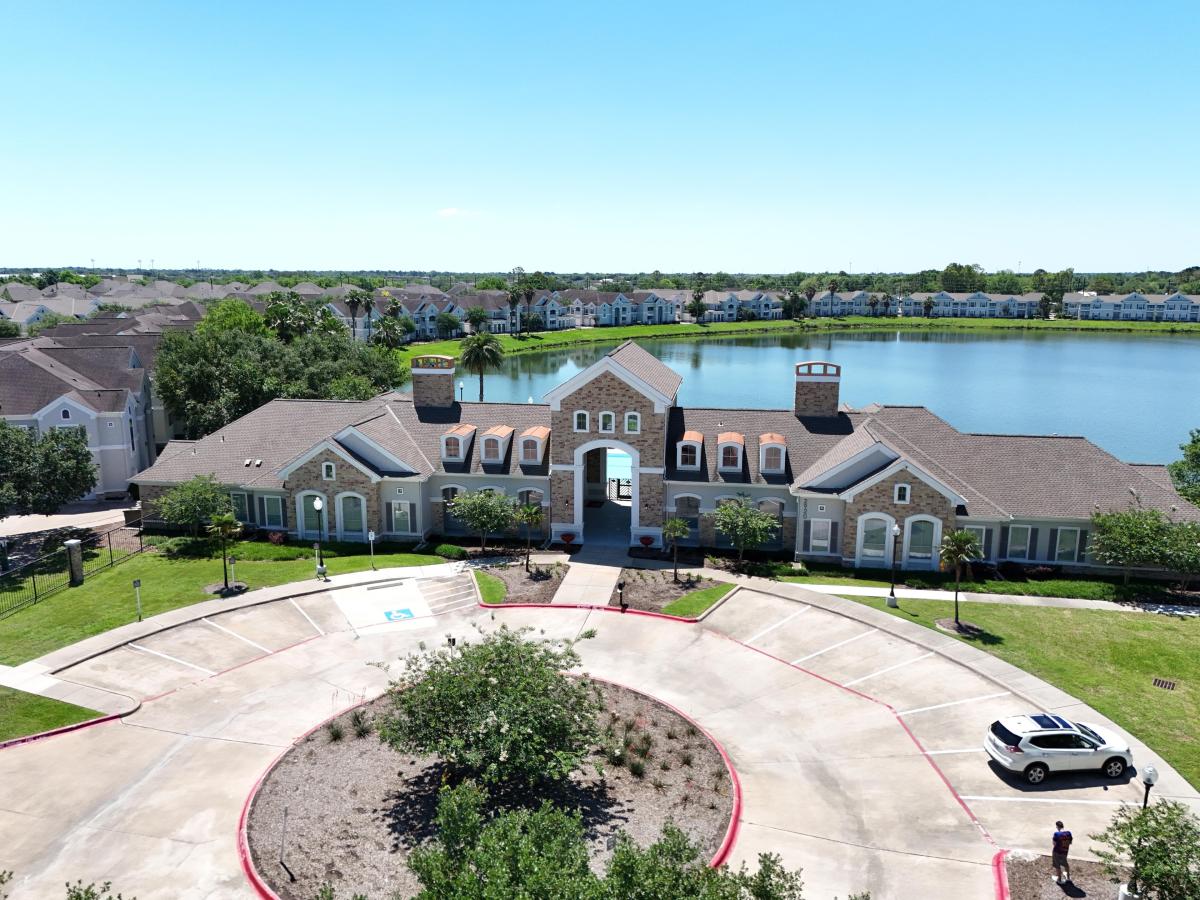
I want my drone practice to keep being a vehicle for telling stories from the sky. One new niche I am actively building is aerial pattern analysis for school districts — using drone footage to study fire drills, dismissal procedures, and crowd flow so administrators can make better operational decisions. It sits right at the intersection of educator and pilot, which is exactly where I want to spend more of my time. Beyond that, I am open: real estate, events, news, inspections, mapping. The Houston metro is one of the best drone markets in the country, and I want to be one of the pilots clients here remember.
If I could leave one piece of advice for new commercial drone pilots: even when it is legal, it almost always goes a long way to ask permission to fly over property. Respect builds clients.
About my operation
I am based in Rosharon, Texas, and I cover the entire Houston metro within a 50-mile radius — Harris, Brazoria, Fort Bend, and Galveston counties. My current fleet includes a DJI Mavic 3 Pro, a DJI Mavic 4 Pro, an Insta360 for immersive 360° work, and a Canon EOS 6D Mark II for ground photography. I carry general liability insurance, I am LAANC-aware for controlled airspace, and I am available for same-day or next-day deployment — including rapid post-storm aerial documentation for insurance and legal teams within hours of a weather event. I work in English and Spanish, with full services available in both languages. Servicios completos disponibles en español.
Watch