
07 April 2026
REalloys has signed an agreement to secure supply from one of the highest-grade rare earth deposits in the United States, with just nine months remaining before U.S. defense rules force the removal of Chinese material from the supply chain. Companies mentioned in today's commentary includes: Realloys Inc., Freeport-McMoRan Inc., Lithium Americas Corp., Lynas Rare Earths Ltd., The Metals Company, Electra Battery Materials .
The memorandum of understanding with U.S. Critical Materials Corp. gives REalloys access to up to 10% of production from the Sheep Creek project in Montana, with confirmed dysprosium, terbium, yttrium, and NdPr, the rare earth elements used in high-performance magnets for fighter aircraft, missile guidance systems, radar platforms, and other advanced defense hardware.
REalloys will convert rare earth oxides into metals and magnet-grade alloys, and is building one of the only integrated manufacturing platform in North America capable of producing heavy rare earth metals at an industrial scale. The Sheep Creek agreement adds a domestic source of dysprosium and terbium into that system, reducing reliance on foreign feedstock and tightening control over a supply chain that does not yet exist at scale inside the United States.
The timeline is tight. As of January 2027, rare earth materials of Chinese origin will be banned from use in American military defense systems. That deadline looms large; not only because of a raging conflict in the Middle East that is consuming multitudes of weapons that depend on rare earth metals, but because these magnet-grade alloys are where the U.S. supply chain completely breaks down.
"Metallization is one of the least developed parts of the value chain outside China," REalloys co-founder Tim Johnston said previously. "Even with strong execution and capital, you are looking at a multi-year timeline to build that capability."
THE LOOMING GAP IN AMERICAN DEFENSE
While rare earth elements themselves aren't actually that rare, with deposits across North America, Europe, and Australia, downstream is a more serious bottleneck.
"Rare earth elements are relatively widespread geologically; what is scarce is the industrial capability to economically separate them into high-purity oxides and then convert them into metals and alloys at scale," REAlloys co-founder Tim Johnston explained in an interview with Oilprice.
China controls the vast majority of global rare earth processing and metallization capacity. While mining operations exist around the world, the conversion of those materials into finished metals and magnets has remained heavily concentrated within China's industrial ecosystem. That's where we hit the critical chokepoint.
"If China said we're not going to give you rare earths," said Saskatchewan Research Council CEO Mike Crabtree in a separate interview, "that means no F-35s, no missiles."
Washington is moving fast, now, to secure this supply chain for American defense. The Defense Logistics Agency recently awarded a contract to Terves LLC, whose technology is now part of the REAlloys platform, to advance metallothermal production of samarium and gadolinium metals. The project includes engineering design work for a modular facility capable of producing roughly 300 tons per year, a structure intended to be replicated as demand expands.
Federal financing channels are opening at the same time. The Export-Import Bank of the United States has issued a letter of interest for up to $200 million tied to rare earth processing expansion connected to the REAlloys platform, signaling potential large-scale backing for domestic midstream and metallization capacity. Now, REalloys is moving ahead with its commercial-scale heavy rare earth metallization facility for a fully allied, zero-China supply chain for defense-critical materials, and in 2027.
The Big Defense Names Behind It All
Earlier this week, REalloys brought in Joe Kasper, former Chief of Staff to the U.S. Secretary of Defense, adding a senior Pentagon supply chain official to its advisory board. He joins General Jack Keane, former Vice Chief of Staff of the U.S. Army, and Stephen duMont, president of GM Defense.
This is not a typical advisory group. These are people who know defense procurement really well, and have led the programs that decide who gets qualified, who gets funded, and who actually supplies material into weapons systems. Behind that layer is an operating platform already producing material.
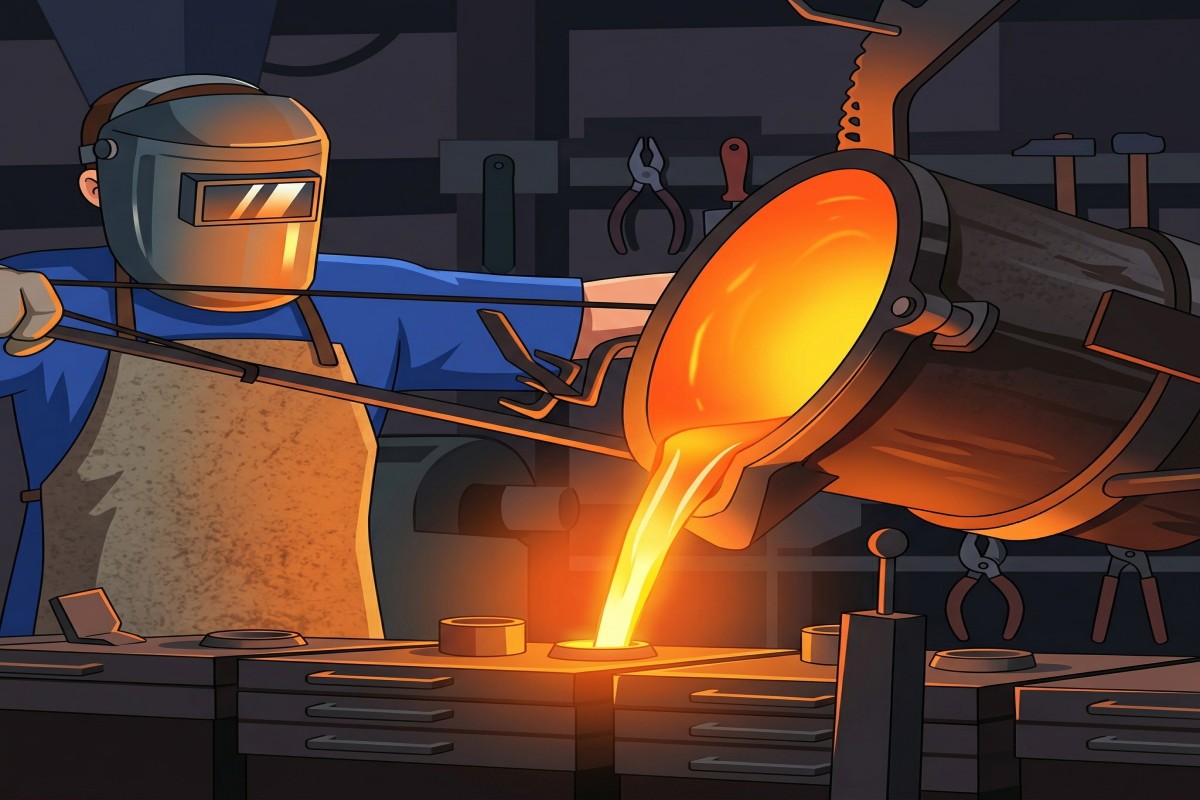
REalloys will run metallization out of Euclid, Ohio, converting rare earth oxides into finished metals and magnet-grade alloys, the form required by defense contractors. That step remains limited in the United States.
The rest of the system is already connected. The Saskatchewan Research Council will produce separated oxides in Canada (first commercial production expected by the end 2026/ early 2027). Those materials move to Ohio, where they are converted into metals and alloys, creating a mine-to-metal chain aligned with U.S. procurement requirements.
REalloys (ALOY) has secured most of that flow. The company holds offtake on roughly 80% of SRC's output, giving it control over one of the few non-Chinese streams of heavy rare earth supply.
Phase 1 targets roughly 525 tonnes per year of NdPr metal, with dysprosium and terbium feeding through the same system. Phase 2 expands that to about 3,000 tonnes of NdPr metal, 200 tonnes of dysprosium metal, 45 tonnes of terbium metal, and roughly 20,000 tonnes of finished magnets.
THE SUPPLY CHAIN CAN'T KEEP UP
The cost of the Iran conflict reached $11.3 billion by day six and $16.5 billion by day 12, with a large share tied to precision-guided munitions. They're blowing through weapons systems run on rare earth metals. And at the same time, pressure is building on the supply side.
Recent reporting from Reuters and coverage in Asian media point to tightening availability of key rare earth materials, with some defense-linked inventories potentially measured in months if disruptions deepen. These materials sit inside missile guidance systems, drones, radar, and fighter aircraft electronics.
"You can't fight a 21st-century war with twentieth-century supply chains," said Lipi Sternheim, CEO of REalloys. "Modern weapons rely on materials that are difficult to source, difficult to process, and difficult to replace once inventories begin to tighten."
And the West is already paying a premium, with European buyers already paying 2-3X more for usable material than the prices quoted inside China. Supply is limited, buyers step in only when they have no choice, and transactions are clearing at elevated levels, while China's domestic market remains controlled.
REalloys is stepping into this critical setup with a fully funded commercial buildout of the most challenging part of America's rare earths metals supply chain, and it's got the Who's Who of defense behind it, along with Pentagon contracts and a looming deadline that gives defense contractors no choice but to buy American.
Other companies to keep an eye on as the resource squeeze accelerates:
Freeport-McMoRan Inc. stands among the world's largest copper producers, with flagship operations at the Grasberg complex in Indonesia and major mining districts across Arizona, New Mexico, and Peru. Although gold and molybdenum contribute to revenue, copper is the company's central exposure , and the metal remains indispensable to electrification, grid modernization, and industrial decarbonization.
The transition of Grasberg from open-pit to underground block-cave mining has extended mine life and stabilized long-term output from one of the world's highest-grade deposits. In the United States, Freeport continues to optimize brownfield expansions and mill throughput improvements to incrementally lift production without relying solely on greenfield permitting.
Lithium Americas Corp. is advancing the Thacker Pass project in Nevada, one of the largest identified lithium claystone resources in North America. The project has secured a substantial loan commitment from the U.S. Department of Energy and strategic equity participation from General Motors, underscoring its importance to domestic battery supply chains.
Following the separation of its North American and Argentine operations, the company is singularly focused on construction and phased development of Thacker Pass. Early works and site preparation are underway, with Phase 1 production targeted for later this decade.
If successfully executed, Thacker Pass could become a cornerstone source of U.S. lithium carbonate, materially reducing import reliance. The project's scale and federal backing position Lithium Americas as a central participant in efforts to localize battery raw material production within North America.
Lynas Rare Earths Ltd. remains the leading producer of separated rare earth materials outside China. The company has restructured its processing chain to mitigate regulatory risk and expand long-term throughput.
The Kalgoorlie cracking and leaching plant in Western Australia is fully operational, allowing Mt Weld concentrate to be processed domestically and radioactive residues to be managed before shipment. This shift has enhanced supply security while addressing prior Malaysian regulatory concerns.
In the United States, Lynas is progressing construction of its Seadrift, Texas heavy rare earth separation facility, supported by Department of Defense funding. The plant will produce dysprosium and terbium critical to high-temperature magnets used in EV and defense applications.
The Metals Company's NORI-D project is estimated to contain enough Nickel, Cobalt, Copper, and Manganese to meet the requirements of 280 million electric vehicles, roughly the size of the entire U.S. light vehicle fleet. Because these nodules are "rocks on the seafloor" rather than ore buried in the ground, TMC's collection process eliminates the need for blasting, tailings dams, and deforestation typically associated with terrestrial mining. Peer-reviewed studies in 2025 and 2026 have suggested that this method could reduce the lifecycle carbon impact of battery metals by up to 90% compared to land-based ores.
TMC is currently working with Benchmark Mineral Intelligence to finalize a Life Cycle Assessment that will prove the environmental benefits of seafloor nodules to Western automakers and defense contractors. While environmental NGOs remain cautious, the U.S. government's push to find "non-terrestrial" sources of cobalt and nickel, both currently dominated by China and the DRC, has provided TMC with significant political tailwinds. As the company moves toward its first commercial recovery in late 2026 or 2027, it stands as the ultimate "wildcard" in the race for critical mineral sovereignty.
Electra Battery Materials is the only company currently building a dedicated battery-grade cobalt sulfate refinery in North America. Located in Ontario, Canada, the facility is a "brownfield" asset that is being refurbished and expanded to provide the midstream link between cobalt mines and battery cathode plants. In February 2026, Electra's board approved a $73 million construction budget to finalize the refinery, with mechanical completion targeted for mid-2027 and early commissioning activities beginning in the fourth quarter of 2026.
The refinery is a critical piece of the Inflation Reduction Act (IRA) puzzle, as it will allow automakers like LG Energy Solution (who has signed an offtake agreement for 80% of the refinery's production) to claim full U.S. tax credits. Electra's facility is designed to process 6,500 tonnes of cobalt sulfate annually, which is enough to power over 1 million EVs. To ensure ethical sourcing, the company has secured feedstock through global traders like Glencore, while simultaneously exploring long-term supply from its own cobalt project in Idaho.