
19 June 2026
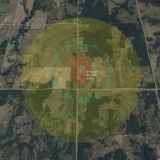
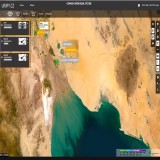
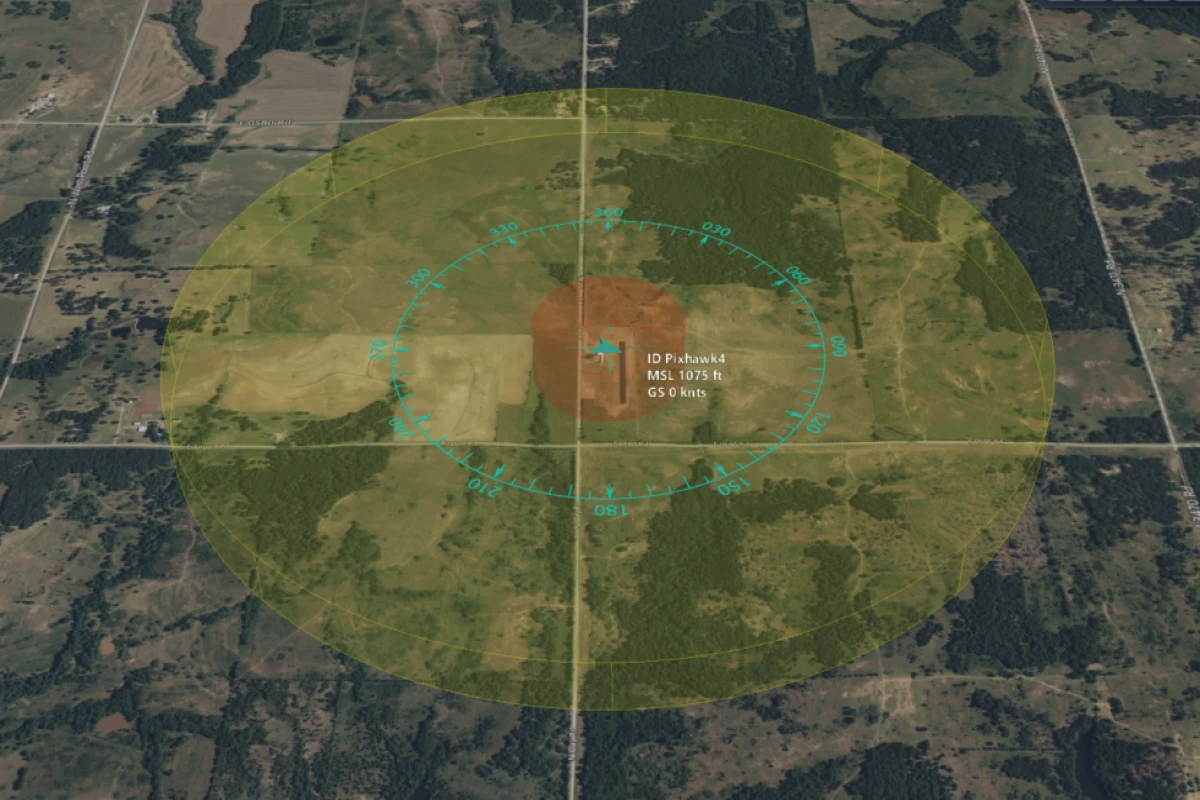
Above Image: FlightHorizon PILOT ground-based viewer software displays data transmitted down from the onboard DAA system. The drone is represented as a blue chevron in the middle of the moving map and the yellow cylinder represents the required well-clear safety distance from other aircraft. Any other detected air traffic will also be displayed on the viewer.
Vigilant Aerospace has announced a new round of flight tests and real-world demonstrations of its FlightHorizon PILOT onboard detect-and-avoid (DAA) system, including new features and functions. The flights have included testing of a lightweight civilian version of the product with a transponder receiver and autopilot integration and a heavier version that also includes onboard radar for detection of aircraft without transponders.
Detect-and-avoid is a critical function to allow autonomous aircraft to fly safely alongside other aircraft in the national airspace. The onboard system was originally developed for the US Air Force under an SBIR contract and is based on two licensed NASA patents. It is a dual-use system, usable by both military and civilian drones.
The new civilian version provides detection, tracking, target correlation and standards-compliant avoidance calculations all on a single-board computer carried suitable for use on very small uncrewed aircraft.
The new development and test flights have been conducted as part of the $1M development project announced earlier this year in collaboration with Oklahoma State University’s Oklahoma Aerospace Institute for Research and Education (OAIRE) and with support from the Oklahoma Center of the Advancement of Science and Technology.
“The future of aviation will largely be autonomous, which will require automatic onboard safety systems. The new rules and standards are emerging today that will set the requirements for integration of drones into the national airspace, so capabilities like those we are developing in FlightHorizon PILOT are designed to get ahead of the requirements and allow industry to being planning and preparing today,” said Kraettli L. Epperson, CEO of Vigilant Aerospace. “These most recent flight test milestones help to provide a path to enabling the industry to execute safe beyond visual line-of-sight flight for both small and large UAS, with fully onboard safety systems,”
New Testing, New Demonstrated Capabilities
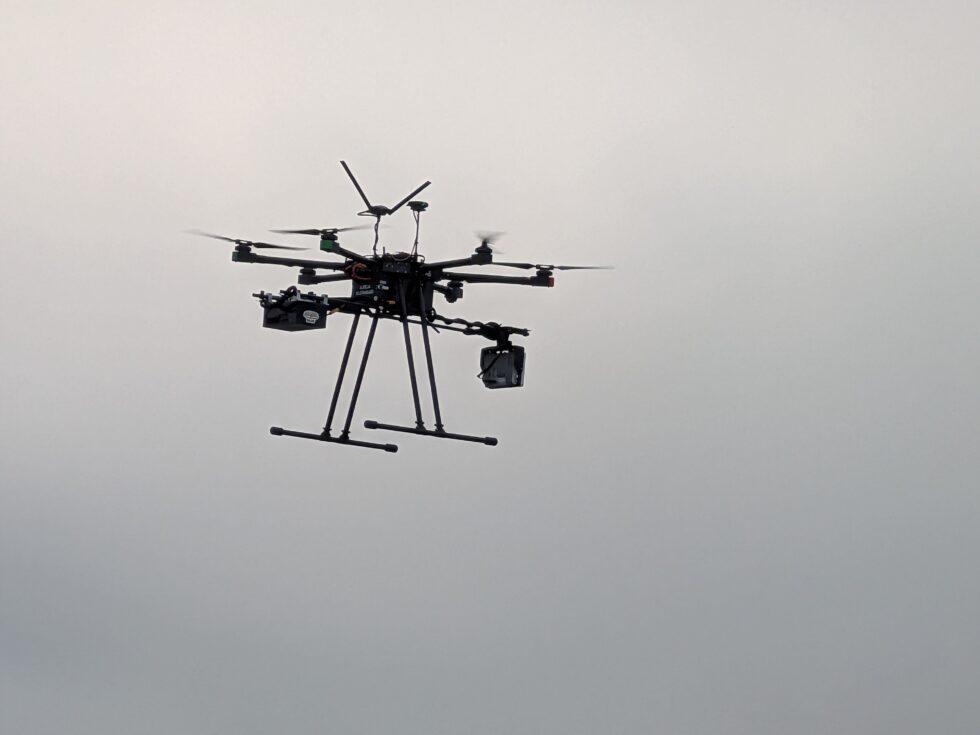
Most of the flight testing for FlightHorizon PILOT was carried out at Oklahoma State University’s Uncrewed Aircraft Flight Station. While this small platform supports ongoing system development, FlightHorizon PILOT is intended for larger UAS platforms.
The recent flights have demonstrated the system’s ability to track targets in flight, calculate trajectories and issue alerts and avoidance commands, all using a small, single-board computer. The company has focused on radar tuning and filtering, testing of an increasing number of both aviation certified and uncertified single-board computers, and testing on both multi-rotor and fixed-wing drones with appropriate algorithm selection for avoidance commands.
The onboard system can be used without radar in “cooperative” airspace where every aircraft is required to have a transponder and with it can be used with radar in “non-cooperative” airspace where aircraft may fly without transponders. Testing has included both versions, allowing fleet operators to choose the version that is right for their airspace.
The avoidance commands provided by the system use the FAA-provided ACAS-X algorithms to calculate alerts and avoidance commands, allowing for rapid adoption of the system by industry. The system delivers commands both to the onboard autopilot and secondarily to a ground-based viewer software with a moving map, allowing pilots to easily supervise the onboard DAA system.
The most recent flights have been conducted with a hexacopter drone (Group I) that complies with national security requirements (NDAA-compliant), including both radar and non-radar flights. Flight testing with OSU will soon move to a significantly larger civilian fixed-wing drone (Group II) that can carry over 60 pounds payload over distances up to 300 miles using a gasoline engine. The drone is especially suited to missions like firefighting, search and rescue, delivery of critical supplies over long distances, infrastructure inspection and other important tasks.
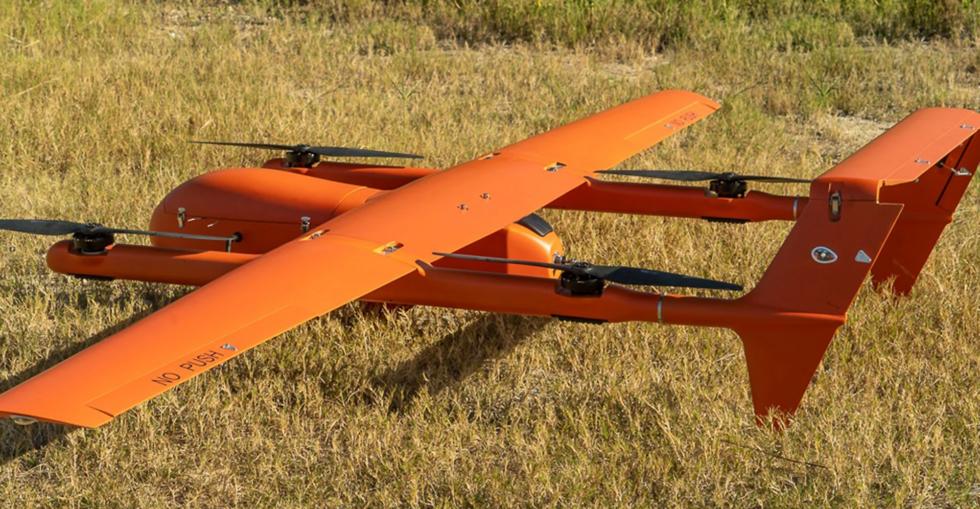
A Mugin 6 Pro, the next drone Vigilant Aerospace will install FlightHorizon PILOT on. (Courtesy, Mugin UAV)
These recent flights mark an important step in demonstrating both versions of FlightHorizon PILOT, from lightweight cooperative DAA for smaller aircraft to a more comprehensive onboard system with radar for larger platforms that require non-cooperative traffic detection.
How FlightHorizon PILOT Works
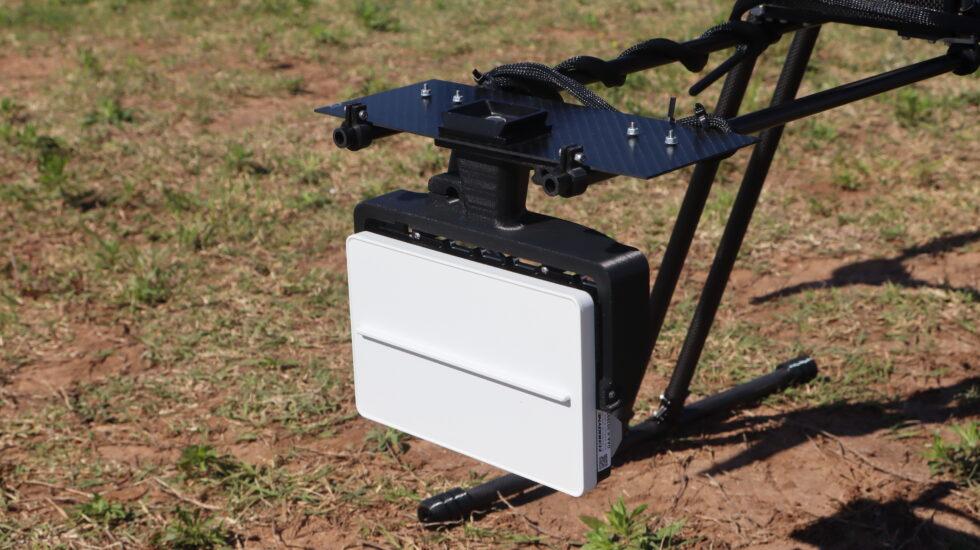
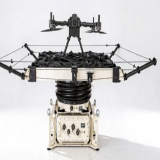
The onboard radar system that supports non-cooperative detection for FlightHorizon PILOT-M.
FlightHorizon PILOT is built around an onboard single-board computer that connects to the autopilot and onboard sensors. The system tracks surrounding aircraft in relation to the UAS, calculates trajectories, and generates avoidance commands when needed.
The system can be configured for a range of aircraft sizes, runs FAA-approved avoidance algorithms and uses data from its onboard ADS-B In transponder receiver and a compact onboard radar, when required, to create a live picture of the surrounding airspace.
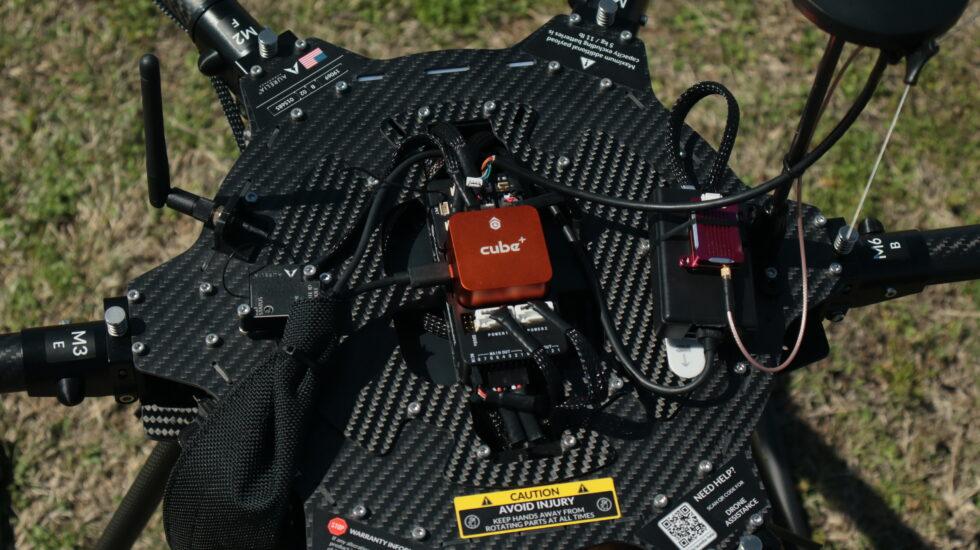
Shown here are the drone’s Orange Cube autopilot and the onboard ADS-B In receiver with external antenna, which provides cooperative traffic inputs to the FlightHorizon PILOT system.
The recent flight tests have focused on testing the software on a variety of small computers and with a variety of receiver and radar configurations. Designed for low size, weight, power, and cost (SWaP-C), the system also logs detailed air traffic and avoidance-command data. It is designed to support compliance with industry technical standards like RTCA DO-365C and ASTM F3442-25, depending on the hardware configuration.
Why This Matters Now: A Path to Part 108 Compliance
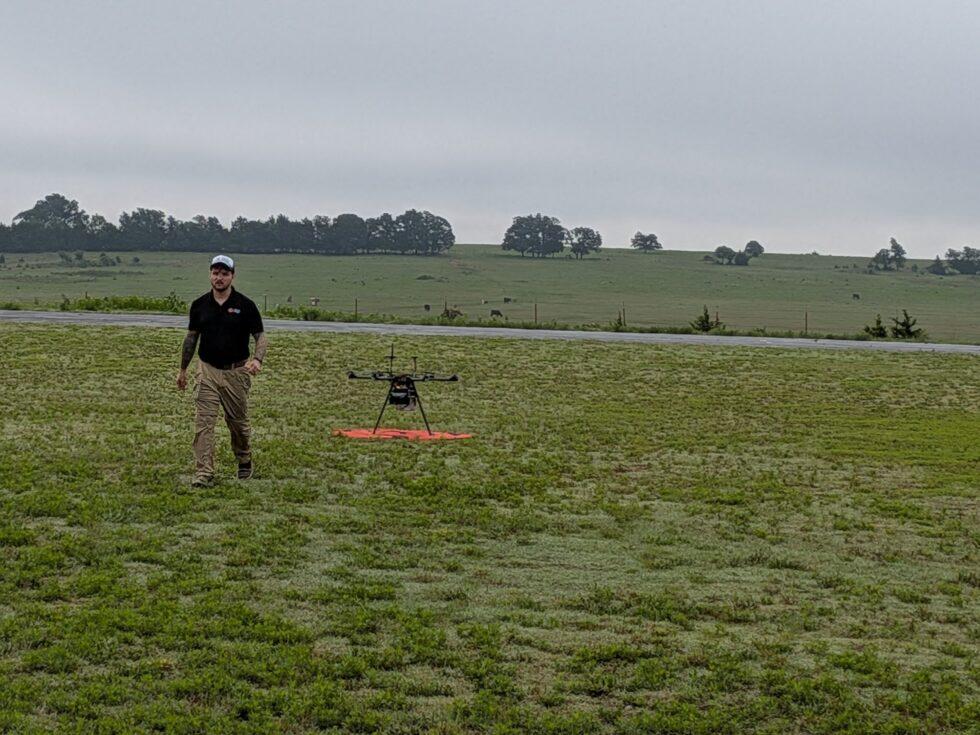
Vigilant Aerospace Director of Operations Kendyn Webster walking away from a drone being used to test FlightHorizon PILOT at Oklahoma State University’s Uncrewed Aircraft Flight Station.
Until now, FAA rules have required small UAS to remain within the visual line of sight of the pilot unless operating under a waiver. Larger civilian and military UAS have required special exemptions and air traffic control coordination to fly beyond visual line of sight (BVLOS). The FAA has now published draft rules that would allow drones up to 1,320 pounds to routinely fly at low altitude beyond the visual line of sight of the pilot. Those draft rules are expected to require some form of DAA to keep UAS safely separated from other air traffic.
As drones become more autonomous and more widely deployed, automatic safety systems will also be needed to enable the safe growth of the industry. In addition, large UAS and AAM aircraft will also require better and more automatic onboard safety systems to scale up flights. FlightHorizon PILOT is intended to address these needs with a product family that supports both smaller commercial drones and larger platforms requiring onboard sensors.
Prior Development History
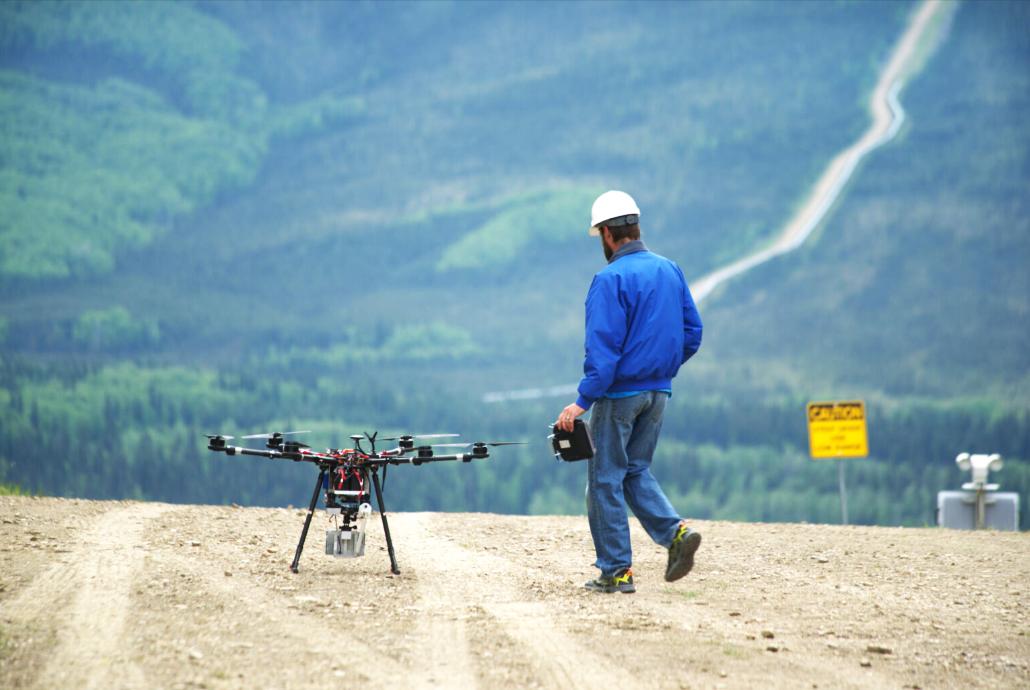
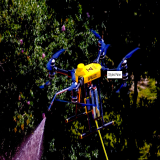
A drone equipped with an early version of FlightHorizon PILOT ready to take off for pipeline inspection in Alaska.
The first flight tests of FlightHorizon PILOT were conducted under an FAA research contract in partnership with the Alaska Center for Unmanned Aircraft Systems Integration (ACUASI). During those early tests, the system supported flights for miles along the Trans-Alaska Pipeline with an onboard radar and multiple ground-based radars. under an FAA BVLOS waiver.
Subsequent to that project, FlightHorizon PILOT advanced through an Air Force Research Laboratory (AFRL) Small Business Innovation Research (SBIR) Phase II project focused on integrating a mature DAA capability onto a larger Group V military UAS. The effort built on Vigilant Aerospace’s earlier flight testing, patents, algorithms, and simulation work to mature a multi-sensor onboard system for larger military UAS and other aircraft that need automatic self-separation and collision avoidance in more complex airspace.
The recent award of the OCAST Industry Innovation Program (IIP) project to Vigilant has allowed the company to now develop and demonstrate an increasingly sophisticated civilian version of the product. Together, these projects demonstrate FlightHorizon PILOT as a flexible onboard detect-and-avoid system for both civilian and defense applications. From lightweight cooperative detection for smaller UAS to radar-enabled detection of non-cooperative aircraft for larger platforms, the system is being developed to support a wide range of aircraft classes, airspace environments, and mission requirements.
Watch the Flighthorizon Pilot Project Summary
About the Oklahoma Center for the Advancement of Science and Technology (OCAST) Industry Innovation Program
The Oklahoma Center for the Advancement of Science and Technology is a state agency that supports technology-based economic development in Oklahoma through applied research and commercialization programs. Through initiatives such as its Industry Innovation program, OCAST provides contract funding for industry-led research and development projects and university partnerships that advance technical innovation and support the transition of new technologies toward commercial use.
About Oklahoma Aerospace Institute for Research and Education (OAIRE)
The Oklahoma Aerospace Institute for Research and Education is an institute within Oklahoma State University that coordinates aerospace research, testing, and workforce development initiatives. OAIRE supports partnerships among academia, industry, government, and the military, with a focus on UAS, AAM, flight testing, and aerospace systems integration.
About AFRL
The Air Force Research Laboratory (AFRL) is the primary scientific research and development center for the Department of the Air Force, and plays an integral role in leading the discovery, development, and integration of affordable warfighting technologies for our air, space, and cyberspace force.
About ACUASI
The Alaska Center for Unmanned Aircraft Systems Integration (ACUASI) is a research center within the University of Alaska Fairbanks focused on integrating uncrewed aircraft into civil, scientific, and government missions. ACUASI supports UAS operations across a wide range of aircraft classes and payloads, with particular expertise in Arctic and sub-Arctic environments. Its capabilities include flight operations, payload integration, engineering support, and secure data management for complex UAS missions.
About Vigilant Aerospace Systems
Vigilant Aerospace is the leading developer of multi-sensor detect-and-avoid and airspace management software for uncrewed aircraft systems (UAS or drones). The company’s product, FlightHorizon, is based on two NASA patents and uses data from multiple sources to display a real-time picture of the air traffic around a UAS and to provide automatic avoidance maneuvers to prevent collisions. The software is designed to meet industry technical standards, to provide automatic safety and to allow UAS to safely fly beyond the sight of the pilot. The software has won multiple industry awards and the company has had contracts and users at NASA, the FAA, the U.S. Department of Defense and with a variety of drone development programs.