
20 May 2026
The Pentagon recently placed the largest drone order in American history — 30,000 one-way attack drones, with plans to scale past 300,000 by early 2028. There's one major problem: every one of those drones runs on a rare earth magnet. And according to Goldman Sachs, China controls roughly 98% of rare earth magnet manufacturing, including drone motors.
That's the dilemma REalloys has spent years building to solve. The company holds the only fully non-Chinese "mine to magnet" heavy rare earth supply chain in North America — from processed metals to finished alloys to the magnet-ready inputs that defense contractors actually need.
To understand why the Pentagon is moving this aggressively, you have to look at what happened in Ukraine. Over the past two years, drones have fundamentally reshaped modern combat like no other technology since the machine gun. Ukraine built over 1.2 million of them in 2024 alone. The magnets that powered nearly every single one came from China. That means that one move from China could potentially shut down the military of major countries in the West.
The Pentagon has watched that play out in real time. And its response has been the most ambitious autonomous weapons program in modern American history. In June, President Trump signed an executive order titled "Unleashing American Drone Dominance" that would help boost drone production both in commercial and military sectors.
The next month, Defense Secretary Pete Hegseth issued a memo planning to build up drone manufacturing by approving the purchase of hundreds of American products. ,Add to that a defense budget for 2026 with $13.6 billion for autonomous systems, and it's becoming clearer by the day just how committed the U.S. is to drones as a part of their defense strategy. However, allocating billions of dollars to the problem can't fix the supply chain issue behind the manufacturing of these magnets.
Today, at least 80,000 components across 1,900 U.S. weapons systems depend on Chinese-sourced rare earths. That's not just drone motors — it includes guidance systems, sensors, and virtually every platform the Pentagon fields. If Beijing tightens the valve, there's no backup supplier to call. That's exactly why REalloys built what it built.
The Gap Nobody Else Is Filling
While much of Europe has neglected the problem, America has been spending aggressively with American companies to fix the issue in 2026. For example, the Pentagon took a $400 million equity stake in MP Materials last year, becoming the company's largest shareholder, and has loaned hundreds of millions more to other domestic rare earth companies.
Those are serious moves and show the government's commitment to staying ahead of the changing military landscape. And MP Materials is making real progress on the light rare earth side — neodymium and praseodymium, the elements that go into everyday magnets for consumer EVs and electronics. But here's the distinction most people don't realize about this rare earths' crisis.
Light rare earths give you the base magnetic strength. Heavy rare earths like REalloys produces — including dysprosium and terbium — are what keep those magnets stable at the extreme temperatures inside a jet engine or a drone motor in combat.
Without them, your magnets quickly degrade under heat. That's the difference between a consumer-grade magnet and a military-grade one. But while many have focused on the consumer side of the supply chain issues, the heavy rare earth gap — the one that military-grade drone motors, missile guidance systems, and jet engines actually depend on — is a separate problem. It's a problem that requires America and its allies to sidestep China's ability to cut them off at each step of the supply chain, and REalloys sits at a crucial vantage point.
How REalloys Built What Nobody Else Has
REalloys' supply chain starts at the Saskatchewan Research Council's Rare Earth Processing Facility — the only operational, fully non-Chinese processing plant in North America. The company holds an exclusive offtake covering 80% of that facility's output.
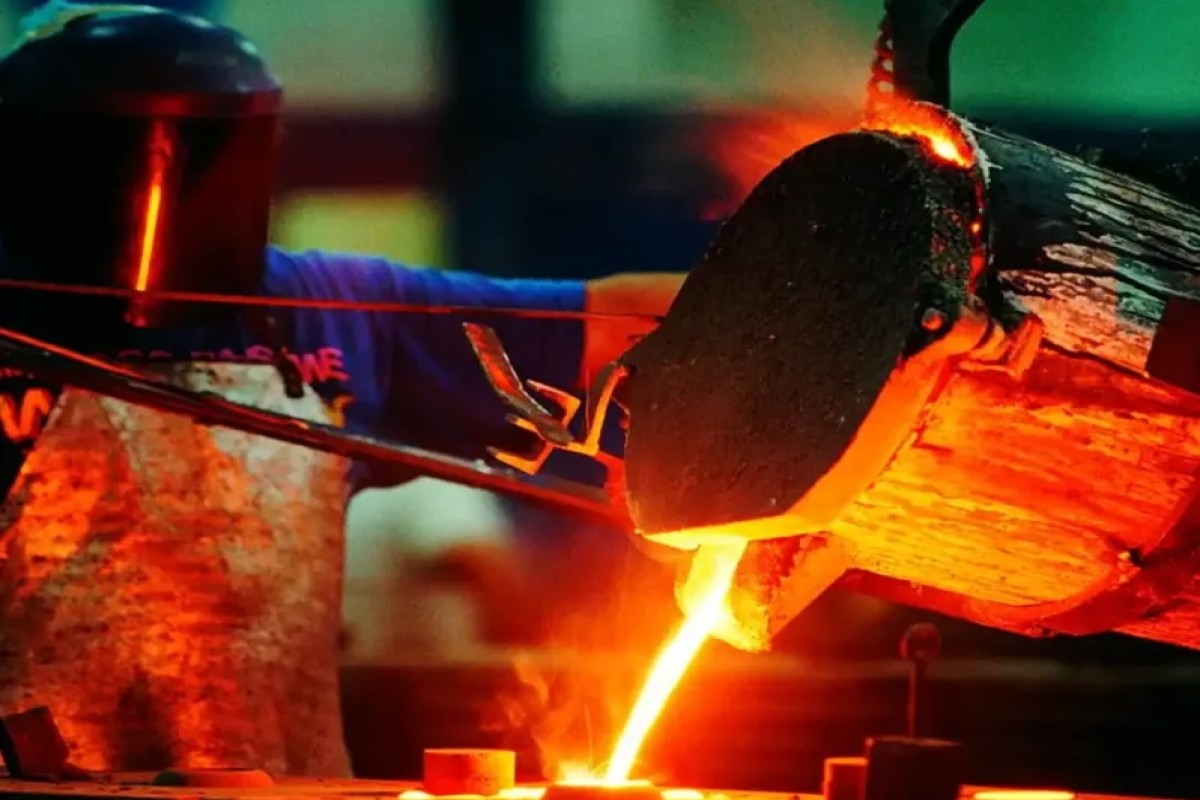
From there, those processed metals ship to REalloys' own metallization facility in Euclid, Ohio, where they become defense-grade alloys and magnet-ready materials. Feedstock comes from North America, Brazil, Kazakhstan, and Greenland, which means there's no single point of failure and no Chinese inputs at any step.
In late 2020, Beijing blocked the sale of rare earth processing equipment and know-how to any country outside its orbit. That effectively cut off the usual playbook: buy Chinese technology, set up a plant, and start producing. Which is why REalloys' processing partner went a completely different direction — designing custom furnaces, proprietary separation chemistry, and AI-driven control systems from scratch. And that bet on homegrown technology is clearly paying off today as China has only continued to tighten the clamps on the world's rare earth supplies.
In April 2025, Beijing imposed licensing requirements on seven heavy rare earth elements, including dysprosium and terbium, covering all related compounds, metals, and finished magnets. A second wave of restrictions was announced and then temporarily suspended through November 2026, but the first wave remains in full effect.
The Pentagon's Looming 2027 Deadline
The timing of the Pentagon's drone program becomes even more critical as they prepare to set new procurement rules in 2027. That's when the government will effectively ban Chinese-origin rare earths from the U.S. defense supply chain — from mining all the way through to finished production.
An F-35 contains more than 900 pounds of rare earth materials. A Virginia-class submarine requires over 9,200 pounds. Lockheed Martin, Northrop Grumman, and RTX will all need to trace and certify their magnet supply chains before the deadline hits — or risk losing their contracts. Which means the biggest defense contractors in the world will soon need a compliant supplier of heavy rare earth materials. And REalloys has been moving fast to meet that moment.
In March, the company closed an upsized $50 million public offering, with roughly $40 million going toward building the largest heavy rare earth metallization facility outside China. They're targeting first operations in 2027, with Phase 2 scaling to make REalloys the largest Western producer of refined dysprosium and terbium by a wide margin.
Where This Is Heading in 2026
The Pentagon has made its bet, committing to $13.6 billion on drones and autonomous systems, hundreds of thousands of unmanned platforms, and a new kind of warfare. However, it's impossible to buy our way out of a supply chain that doesn't exist. That takes years of work in separation chemistry, metallurgy, and defense qualification — work that REalloys started over a decade ago, long before rare earths became a national security headline.
America currently imports 10,000 tons of rare earth magnets. The DFARS deadline to end the dependence on China is nine months away. And it would take a credible competitor starting from scratch between three to seven years to reach comparable capability. You can fund a mining operation in a year. You can break ground on a processing facility in two. But building the metallurgy, qualifying with defense contractors, and securing feedstock from multiple non-Chinese sources takes the better part of a decade.
REalloys has already put more than a decade into securing every part of the supply chain outside China's control. When the Drone Dominance Program scales from 30,000 units to 300,000, the magnets inside each one will need to come from somewhere other than China. REalloys is building that supply chain — and right now, it's the only company in North America positioned to deliver.